

Everything You Need to Know About Your Alternator

There’s a misconception that the battery in your vehicle provides power to everything that needs it in your car. From your air conditioning to your power-adjustable exterior mirrors, many items need electricity to operate in your car. Since we so often associate batteries with powering other things in our world, like flashlights and electric toothbrushes, it’s no wonder we assume the car battery powers the whole car. However, the reality is that something called the alternator powers most electrical components in your vehicle. It even charges your battery.
So, really, the alternator is the life source of your vehicle. If it’s not working, you’ll face a multitude of issues. But how do you know when it’s time for an alternator replacement? Do you have to wait for a full-on breakdown to know? We’ll cover the basics of how an alternator works and the signs that it might be time to replace yours.
A Quick Overview of Your Alternator
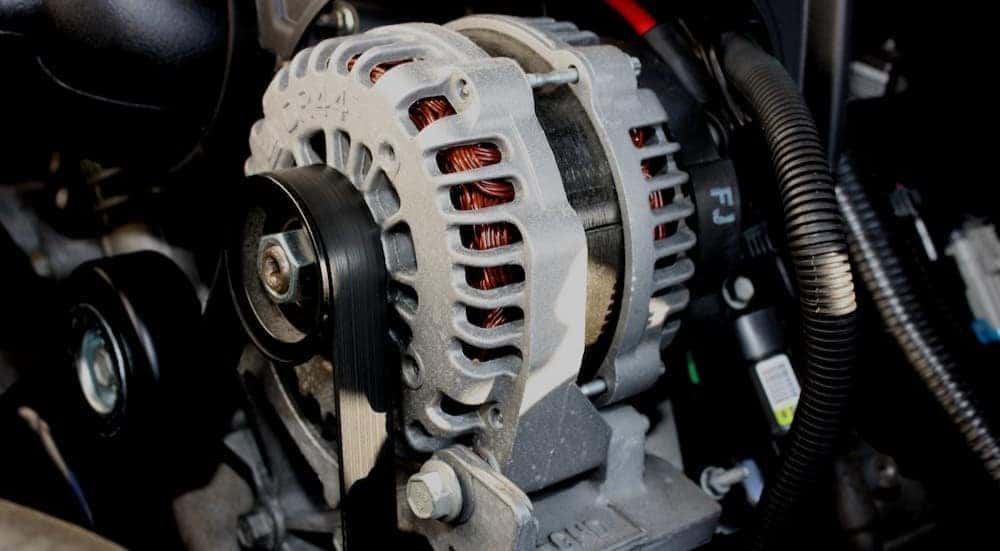
Your alternator relies on an intricate network of parts to create power and get it to your battery and other elements of your vehicle. We won’t get too science-heavy here, but these are the basic parts of your alternator:
Rotor and stator: The rotor sits inside the stator. It’s a cylindrical part enveloped in magnets that rotates inside the stator. The stator has conductive copper wires, and these interact with the rotor’s magnets to conduct electricity.
Voltage regulator: The voltage regulator monitors how much power is sent to your battery and delivers electricity to the rest of your vehicle.
Diode rectifier: Put simply, your alternator produces Alternating Current (AC) power, but your battery needs Direct Current (DC) power. The diode rectifier converts the AC power to DC so your battery can use it.
Cooling fan: This prevents your alternator from overheating—and that thing creates a ton of heat.
Now that you have a basic understanding of how the alternator works and some of the parts inside it, we’ll go over signs that it is time to replace yours.
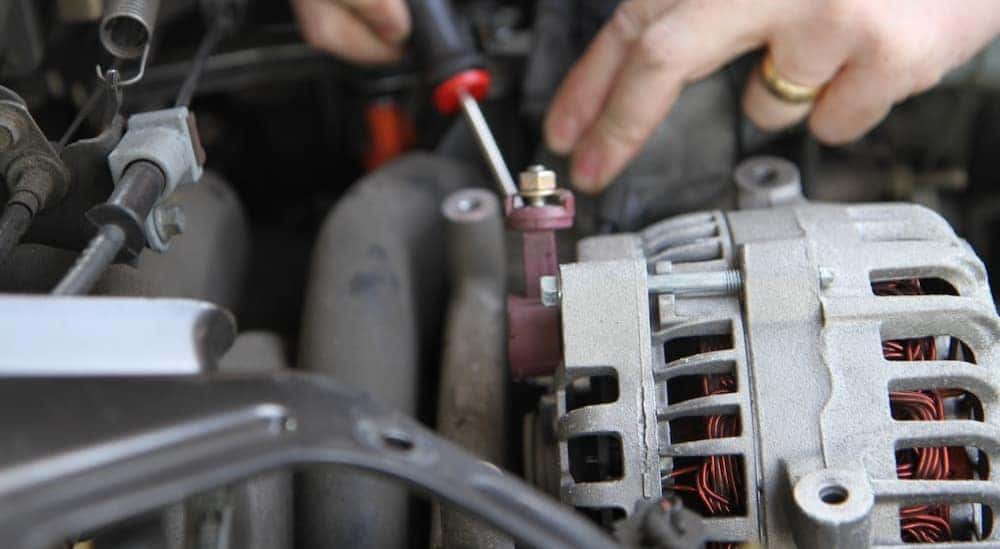
Signs It’s Time to Replace Your Alternator
Because your alternator delivers power to your battery and all the electric components of your vehicle, having a dead alternator can leave you on the side of the road, calling for a tow truck. We want to prevent that from happening, so here are signs to be aware of. If you see them, bring your vehicle in for service right away.
Non-Essential Accessories Are Struggling
Modern vehicles are smart and constantly monitor your alternator’s ability to put out power. If it has to, it will reserve power for the essentials. If your alternator struggles to deliver power throughout your vehicle, the onboard computer might shut down power to non-essential items like your radio or air conditioning to save it for your battery. If you notice issues like power windows slowing down or climate control not really working, these could be early signs of a malfunctioning alternator.
Pro tip: receiving signals like these from your car is a blessing because a poorly working AC doesn’t derail your day, but a dead battery does. Don’t ignore malfunctioning non-urgent items. Consider these accessory issues a gift because they can encourage you to get service, so it doesn’t become a larger (and more expensive) issue.
Your Battery Light Turns On
Your dash doesn’t have an alternator light, but it does have a battery light. Sometimes, when the battery light goes on, it’s because the alternator is struggling to provide the battery with adequate power. When you see the battery light go on, visit our service center right away. You don’t want to wind up on the side of the road with a dead battery.
Low Lights
Your alternator provides power to your exterior lights, including your headlights, high beams, and fog lights (if you have these). If the light from any of these appears dimmer than usual, your alternator may be struggling to deliver adequate power to these components. Again, you’d rather learn about the issue this way than with a dead battery. Bring a vehicle with dim lights to our service center right away. It could be an issue of bulbs that need replacing, but it’s best to make sure it isn’t an alternator issue. And if it is, get that fixed right away.
Starting Your Car Is a Whole Process
You should never have to try multiple times to start your engine. A healthy and fully charged battery will start your ignition on the first try. If you find that you have to turn your key several times before the vehicle starts, it’s possible that the alternator hasn’t properly recharged your battery. If the battery isn’t fully charged, it won’t pack the same punch and can have trouble getting the engine going.
A Burning Smell
Remember that we said your alternator produces a lot of heat? Well, if it has to work too hard due to internal issues, the fan might not be enough to keep it cool, and it could create a burning smell. Alternatively, there are rubber parts involved in keeping your alternator working. If any of these fall out of alignment, they can bump up against other parts, creating friction and a burning rubber smell. If you ever notice a burning smell coming from your vehicle, pull over, get out of the vehicle, and call for professional assistance.
Alternator Replacement FAQs
There is usually a lot going through your mind when your car starts having issues. Here are some common questions you might have if you know you need to replace your alternator.
How much does it cost to replace an alternator? The part alone can cost around $100 and $300. Once you add labor costs, replacing an alternator will cost you a bit more than that. Your specific make and model will impact these figures.
How often do alternators need to be replaced? Even healthy alternators don’t last forever. An alternator that is properly maintained should last around 80,000 and 150,000 miles. Again, your make and model, as well as your driving habits, will impact these numbers.
Do you need an Original Equipment Manufacturer (OEM) alternator? We always recommend using OEM parts to maintain the dependability of your vehicle. Factory parts are held to a higher standard and usually last longer than aftermarket parts. Speak to your factory-trained technician to learn what is best for your vehicle.
The Alternator Is the Heart of Your Vehicle
It makes sense that many people believe the battery is the heart of the vehicle, but the truth is that the battery wouldn’t work without the alternator. Tons of parts of your car wouldn’t work without the alternator. Often, when people bring their vehicle to our service center expecting to hear they have an engine problem or a battery problem, they learn it’s an alternator issue. That’s why it is important to have some basic knowledge of what the alternator is and how it works.
Don’t ignore any of these signs of a malfunctioning alternator. Alternators don’t give you warning signs for long. Shortly after these issues show up, you could be dealing with a dead battery. If you notice any of these symptoms, visit our service center right away.

0 comment(s) so far on Everything You Need to Know About Your Alternator