

Understanding Your Brakes and the Service They Need
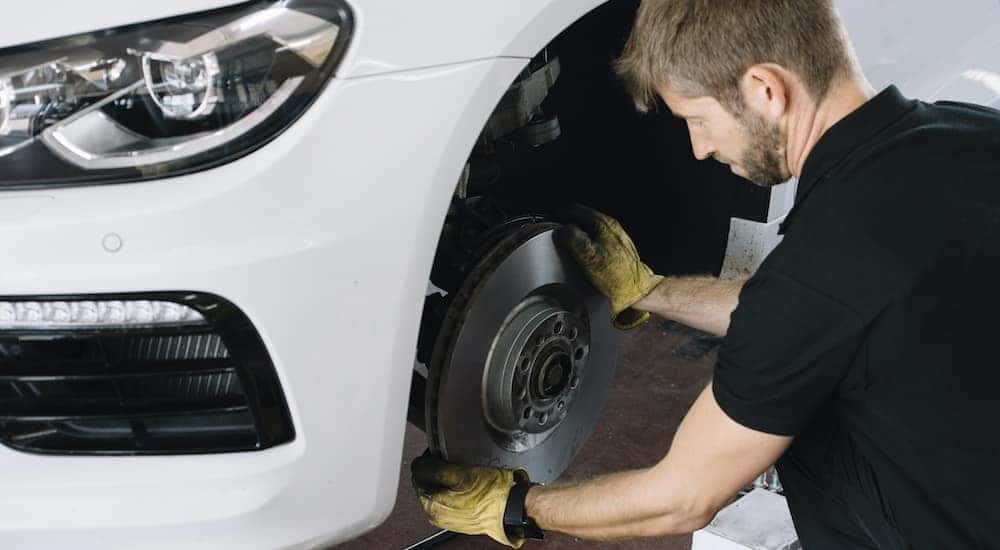
It’s no overstatement to say that the brakes are some of the most, if not the most, important parts of your vehicle. While your tires might be the only point of contact between your car and the road, your brakes are the only things that will stop them once they start rolling. We offer Toyota brake service along with other maintenance here at Romeoville Toyota because of the importance of these parts.
Despite how integral the brakes on your vehicle are, many people really don’t have much understanding of how they work. Today, we’re going to take you through the basics of how different types of brakes on vehicles function, how to tell if they’re wearing out, and what you need in terms of common brake service. Don’t worry, we’re not going to get too technical, but by the end of this, you’ll have a pretty good idea of what allows your vehicle to stop safely when you’re on the road.
Brake Basics
Before looking at some specific types of brakes, let’s go over some basic things that pretty much all Toyota brake systems have in common. For starters, modern cars typically have brakes on all four wheels and use a hydraulic system to distribute pressure between them. This hydraulic pressure relies on a circuit of fluid-filled cylinders: master cylinders under the hood, with slave cylinders located at each wheel.
When you apply the brakes by pressing down on the pedal, what you’re actually doing is pushing on a piston in the master cylinder. By pushing this piston, you force fluid through the brake lines to the wheels, which in turn pushes the slave pistons in each of the slave cylinders. By using hydraulic pressure in this kind of system, you apply relatively little force with your foot, but it’s magnified and creates a greater force on the brakes. This way, you can stop your vehicle, even at high speeds, while not having to press down very hard.
Keep in mind that this is a pretty simplified overview of the whole thing, but you get a good sense of essentially how it works. All Toyota models these days have anti-lock braking systems in place that apply and release the brakes rapidly when you press the pedal down hard. This keeps your brakes from locking up and avoids hydroplaning on wet surfaces, so you don’t have to “pump the brakes” manually like drivers had to back in the 20th century.
Types of Brakes – Disc Brakes
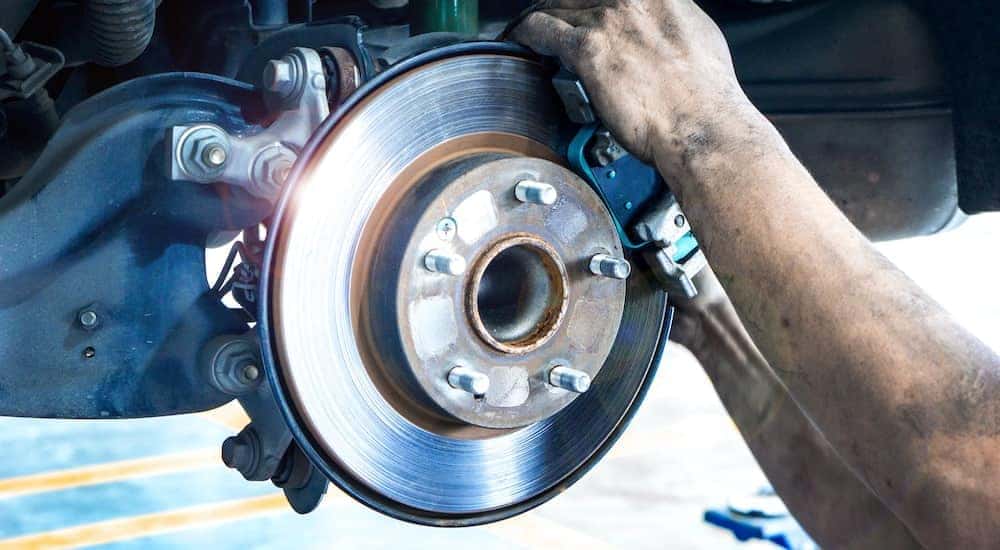
There are two main types of brakes that you’ll find on Toyota vehicles these days; we’ll start with disc brakes. Disc brakes have a large disc connected to each wheel of your car, which spins with the wheel while you’re driving. Around this disc is a large caliper that has small pistons inside it and pads on either side of the disc; while you drive, these don’t touch the disc.
When you apply the brakes, the hydraulic system pushes the pistons in, clamping them against the disc from each side. This creates a great deal of friction and causes the disc to slow down and eventually stop. Since each disc is connected to a wheel, this causes the wheels to stop spinning as well, which makes your vehicle slow down and come to a stop. These kinds of disc brakes work very well, but they’re also fairly expensive; all Toyota vehicles have disc brakes on at least the front wheels because they do more work when braking.
Types of Brakes – Drum Brakes
Only found on the rear wheels of certain Toyota models, drum brakes work fairly similar to disc brakes but with a different mechanism for slowing down the wheels. Instead of a disc, these brakes have a hollow drum that turns along with the wheels. This drum has a stationary backplate and two curved shoes with friction linings that sit within the drum.
When you apply the brakes, the hydraulic pressure pushes pistons that press the shoes against the inside of the drums. This causes the drum to slow down, which in turn slows the wheels and eventually brings your vehicle to a stop – similar to how the discs in disc brakes work. There are some subtle variations in this basic design that can improve braking performance or ensure longer-lasting drums, but it really depends on the price of your vehicle and the type of brakes chosen by the manufacturer.
Types of Brakes – Parking Brakes
The types of brakes we looked at – disc and drum – are called “service brakes,” and you use them every time you press down on the brake pedal. Modern Toyota vehicles also have something called an “emergency” or “parking” brake that you typically apply by pulling a lever or a switch. This pulls on a cable or actives an electronic system to brake the rear wheels. This system is primarily designed to keep your vehicle in place when it’s stopped. You’ll typically use these brakes to ensure you remain parked, especially on an incline, though they can be used to slow and stop your vehicle if your service brakes fail.
How to Know You Need Brake Service
There are few simple things you can watch for that will often indicate your Toyota’s brakes need service:
- Squealing and Other Sounds – One of the most common warning signs that there’s something wrong with your brakes is a weird sound or squealing. Squealing when your brakes are wet is pretty common – but if they squeal while dry, then have them checked.
- Sticking when Used – When you apply your brakes, they should slow and stop your vehicle smoothly, then release when you let up on the pedal. If they seem to stick or otherwise feel off when you use them, then have them checked.
- Mushy or Soft Feeling – Similarly, if your brakes feel soft or don’t respond well when you press the pedal, then it often means your hydraulic pressure is off. Have a certified service professional check them and refill or bleed your brake fluid as needed.
- Increased Stopping Distance – One of the clearest indicators that something is off with your brakes is when it takes you longer to come to a stop. This can mean your pressure is off or your pads or shoes are worn down – either way, get them checked out.
- Any time you experience any of these things or otherwise feel like your brakes aren’t as responsive as they should be, then it’s time for a checkup.
Common Types of Brake Service
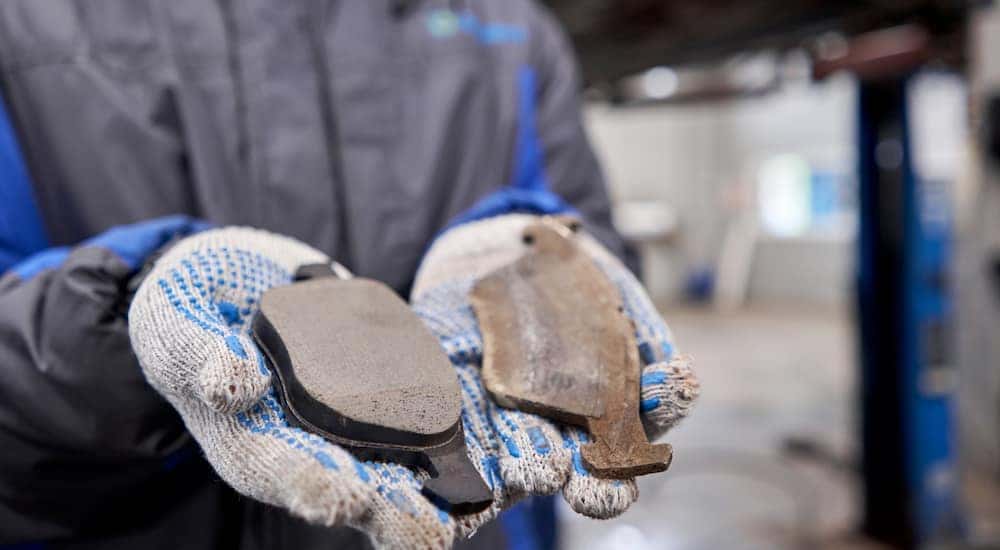
There are a lot of different moving components when it comes to your vehicle’s brakes, so there are many different types of service you might need. Having the pads or shoes checked and replaced is the most common form of service. You can check your vehicle’s manual to see how often they should be replaced, but if they feel off or it’s taking you longer to stop, then have them checked. Sometimes, you will also have to have the rotors or drums resurfaced or replaced when you replace the pads or shoes.
Your brake fluid should also be checked regularly and may need to be filled if your hydraulic pressure is low. Sometimes you’ll need to have the line bled and filled – which means it is drained completely and filled with fresh fluid. It’s a good idea to ask your service professional to take a look at your brakes and the lines, checking for worn pads or possible leaks any time you have your oil changed since they already have your vehicle on the lift.
Whatever your car needs, visit us at Romeoville Toyota today for brake service that you can trust!

3 comment(s) so far on Understanding Your Brakes and the Service They Need
I didn’t know that hydraulic pressure relies on cylinders that are filled with fluid. I’ll need a mechanic to help me out with that. The last thing I need is to mess up the fluid and make a mess.
It helped when you mentioned that it is important that your brake fluid should also be checked regularly to avoid issues. My uncle mentioned to me last night that he and his friend are hoping to find hydraulic system replacement parts and asked if I have any idea what is the best option to consider. Thanks to this informative article and I’ll be sure to tell him that he can consult a trusted driveshaft and hydraulic parts source company as they can answer all their inquiries.
I’m a BMW driver. I like how you said that strange noise or screeching is one of the most common warning indications that there is a problem with your brakes. My automobile makes squelching noises when it’s dry. I’ll visit the BMW brake system repair shop to have it fixed.