

The Evolution of the Toyota 4Runner
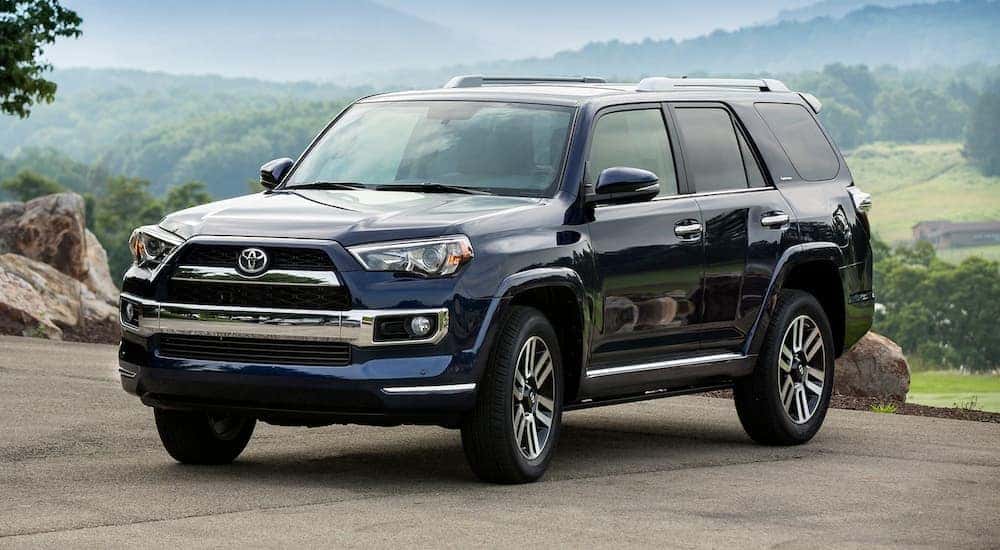
The Toyota 4Runner is celebrating its 40th birthday next year, and you’d be surprised because this midsize SUV still looks as rugged and young as it did the first time it appeared back in 1984. This is because Toyota has always taken steps to make incremental changes on the 4Runner, keeping the things that folks want in this SUV while adding features or appearance improvements to keep things interesting. In fact, the Toyota 4Runner has been running in fifth gear since 2010, when Toyota unveiled the fifth generation of this model.
At Romeoville Toyota, your premier used Toyota dealer, we feature a great lineup of used Toyota models, including the 4Runner. We proudly carry a wide range of pre-owned 4Runner models that fit every driver and budget. We offer an extensive selection of these standout Toyota SUVs, which include a variety of recent model years, trims, and packages. It’s never been easier to get behind the wheel of a pre-owned 4Runner, and our dedicated team will help you choose a model that best fits your unique needs. So, how has the 4Runner evolved over the years to become the celebrated SUV we have come to know? Let’s take a closer look at the 4Runner over its numerous generations.
The 4Runner Makes Its Debut
The year was 1979, and Toyota had decided it was time to develop a rugged SUV modeled on the Land Cruiser but with a smaller, more maneuverable profile. Since it was no longer selling the Land Cruiser, Toyota needed an SUV that had off-road capability for its rural customers in America. Enter Winnebago Industries, the famed RV producer, to team up with Toyota in its latest model, the Trekker. We knew you didn’t see that one coming, probably because the Trekker was a great concept, combining a Winnebago-designed shell on a Helux pickup frame. However, the Trekker didn’t really capture the imagination when it came out in 1981. So it was back to the drawing board, and the result was the 4Runner.
Just like the Trekker, the first-generation 4Runner had a body-on-frame design. The original model had two doors with two rows of seats. This allowed you to sit up to five passengers. When it came out in 1984, the decision was made to give it a name that would let folks know that it had four-wheel drive. This was the origin of the name 4Runner. The first model featured a solid front axle that was changed to an independent suspension. This made the 4Runner go from a model that favored off-roading capability to on-road performance. It also offered drivers the choice of a 2.4-liter I-4 and a 3.0-liter turbocharged V6 gas engine. The latter was the one to choose if you wanted a little more acceleration.
The Second Generation
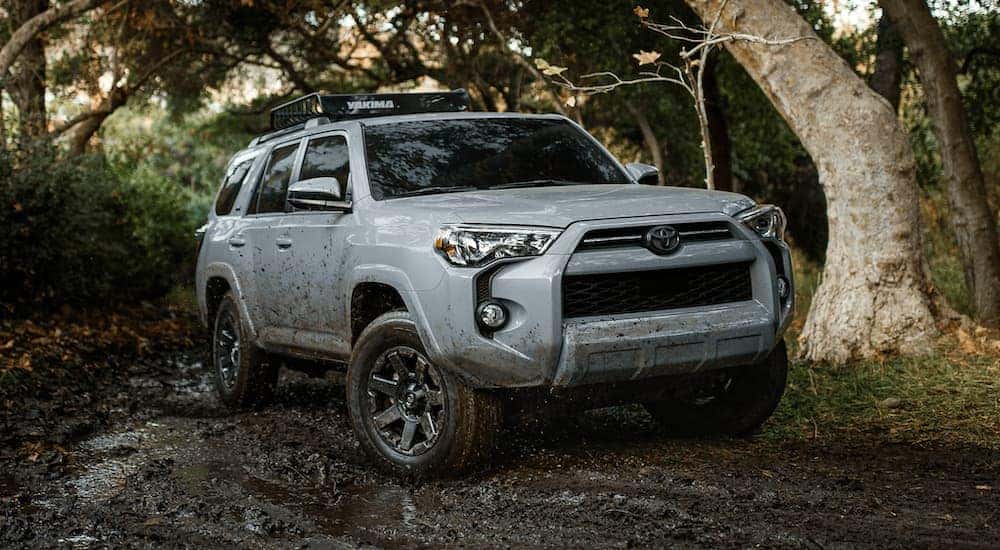
You can always tell when a vehicle is successful when a brand comes out with a second-generation model. This is a full redesign, often with a new engine, different body styling, and more advanced features. Building on its success, Toyota introduced a second-generation 4Runner for the 1990 model year. This also had a body-on-frame design but added a second set of doors, making accessing the rear seat easier for passengers. While Toyota carried over the two engine options from the prior model, it increased the length of the 4Runner. This provided more passenger space, as well as a sleeker profile. The addition of rear coil suspension also delivered a more comfortable ride.
The Third Generation
Big changes were in store for the third-generation Toyota 4Runner. For one thing, it stopped using a truck frame. This resulted in an even smoother ride for this model. Toyota also increased the length of the wheelbase again, giving still more legroom to passengers. It also yielded up to 79.7 cu.ft. of trunk space with the rear seat folded down.
Aside from a striking exterior appearance, some of the biggest changes for the third-generation 4Runner happened under the hood. Hitting the road in 1996, the 4Runner continued to offer a choice of two engines, but these were larger than in prior models. The base was a 2.7-liter I-4, while a 3.4-liter V6 was also made available to drivers. These were more powerful and surprisingly more fuel efficient than those offered on the second-generation 4Runner. This third generation would continue to be offered through the 2002 model year.
The Fourth Generation
If you think bigger is better, you would probably love the fourth-generation Toyota 4Runner. Introduced in 2003, this model did away with the base I-4 gas engine and made a 4.0-liter V6 the standard engine on the 4Runner, delivering an exceptional 245 hp. Toyota also began offering a 4.7-liter V8 option on the fourth-generation 4Runner, offering 235 hp and an impressive 320 lb-ft of torque. As a result, the fourth-generation model delivers more in the way of speed and acceleration than was previously available.
While Toyota continued to use a body-on-frame design with the 4Runner, its looks and handling give it a more maneuverable, car-like dynamic. Moreover, starting in 2005, Toyota began offering a third-row seat as an option. This increased the seating capacity on the 4Runner from five passengers to seven. As a result, an increasing number of 4Runner models began showing up on suburban driveways as family drivers began to embrace this combination of rugged looks, superior handling, spacious interiors, and extra seats.
The Fifth Generation
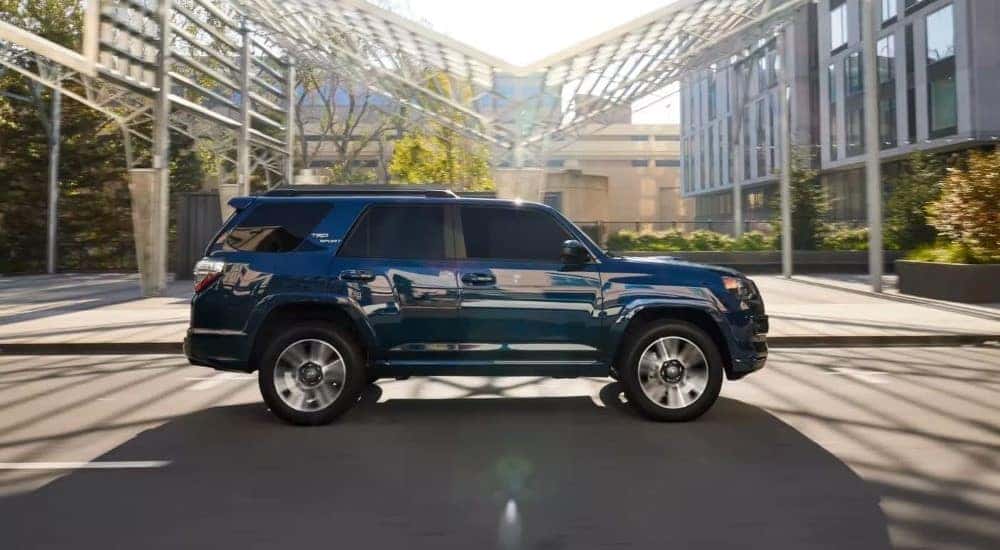
Sometimes, automakers seem to get it right. Sure, it may take some time, but it is always worth the wait when this happens. Such was the case with the fifth-generation Toyota 4Runner, which debuted in 2009. In fact, this is the most recent generation of the 4Runner, with a run of 14 years and counting.
With a boxier frame that harkens back to its off-roading debut, the fifth-generation 4Runner delivers on a vehicle that has more capabilities than has ever been offered on this model. It starts with a standard 4.0-liter V6 gas engine that delivers an impressive 270 hp. This allows you to get great performance no matter which model you choose. You also continue to get a choice of two or three rows of seats.
Toyota also used this fifth-generation model to introduce a number of different features and capabilities. Off-road enthusiasts will love models like the TRD Pro and TRD Off-Road. These were designed in conjunction with the Toyota Racing Division, making the 4Runner more off-road capable with features like specialized off-road suspension, four-wheel drive, and a set of skid plates. This differs from other fifth-generation 4Runner models with standard rear-wheel drive and available four-wheel drive.
The fifth-generation Toyota 4Runner was also the first to get available Toyota Safety Sense driver assistance features. This includes Lane Departure Alert, which will let you know if you start to drift out of your lane. It will then use slight steering adjustments to get you back on the straight and narrow. Toyota also began offering increasingly capable infotainment systems with larger touchscreens. This made making hands-free calls on your 4Runner easier, using features like Bluetooth, Apple CarPlay, and Android Auto.
One of the best things about buying a fifth-generation Toyota 4Runner is that you know almost exactly what you are getting. The standard engine and the fact it has remained with a set profile for over 14 years allows you to pick a used model based on other factors, like mileage, condition, trim level, and drivetrain. As a result, you will be in the driver’s seat when you choose a used fifth-generation Toyota 4Runner.
The Evolution Continues
Whether you are looking for a rugged off-roader or a great family vehicle, a used Toyota 4Runner is the right vehicle for you. With over five generations of models, Toyota has developed the 4Runner into a leader in its vehicle class, delivering rugged capabilities that other models cannot deliver. Come to Romeoville Toyota today and see why your next SUV should be a used Toyota 4Runner from us!

0 comment(s) so far on The Evolution of the Toyota 4Runner