

Snow Tires vs All-Season Tires: What’s the Difference? Do You Need Both?
As a dealership with an entire department dedicated to tires, we get it: tires aren’t always top of mind for drivers. Many of our customers stay on top of oil changes and other routine maintenance, and we get plenty of customers looking for accessories to make their vehicles more enjoyable to ride in or more practical for their day-to-day activities. Tires, on the other hand, can take a bit of a backseat. For some drivers, it’s only when they begin to notice that their tires are responding strangely to the road or making a weird noise that they give much thought to their tires.
If you live in Romeoville or the surrounding areas, you don’t have much choice but to pay close attention to your tires. Drivers out in Southern California or similar regions with mild weather might be able to keep the same tires year-round, but that’s simply not true for us out here in Will County. We get snowy, ice-cold winters—and when those hit, we need to change our tires. Most Romeoville residents have two sets of tires, needing snow tires for part of the year and all-season tires for the rest. However, even if you’ve lived here for many years, we could all use the occasional reminder of the differences between these tires and when it’s time to use each type.
What Are All-Season Tires, and When Should You Use Them?
All-season tires sit right between summer tires (which have very shallow tread depth) and winter tires (which have deep tread depth). All-season treads are designed to provide traction on dry roads, wet roads, and mild snow conditions. Some all-season tires will have an M+S rating on them, which indicates that they are ready for use in mud and light snow.
The rubber on all-season tires is designed to remain flexible at temperatures of 40 degrees Fahrenheit and above. At temperatures lower than 40 degrees, all-season tires can become stiff—and when that occurs, you’ll notice a difference in performance. Specifically, braking distance can be impacted when tire rubber becomes too stiff.
What You’ll Notice About All-Season Tires
When you are inside a vehicle with all-season tires and using them at the appropriate time of year, you should experience a smooth and quiet ride. Their tread design creates minimal (if any) sound when in contact with paved roads and shouldn’t create a bumpy experience for passengers.
When to Use All-Season Tires
As their name suggests, all-season tires can technically be used all year long. However, that’s only true for those who live somewhere with a mild climate. Drivers who only experience very few or zero snow days during the winter—as well as light rainfall during the other seasons—can get away with driving on all-season tires all year long. If you live here in Will County, you won’t be able to keep your all-season tires year-round. When the serious snow hits in the winter, you’ll need to switch to snow tires.
A good rule of thumb is that, if you can see your breath in the air, it’s probably cold enough to switch to your snow tires. Waiting much longer could put you at risk of not having the traction you need on snowy or slippery roads.

What Are Snow Tires, and When Should You Use Them?
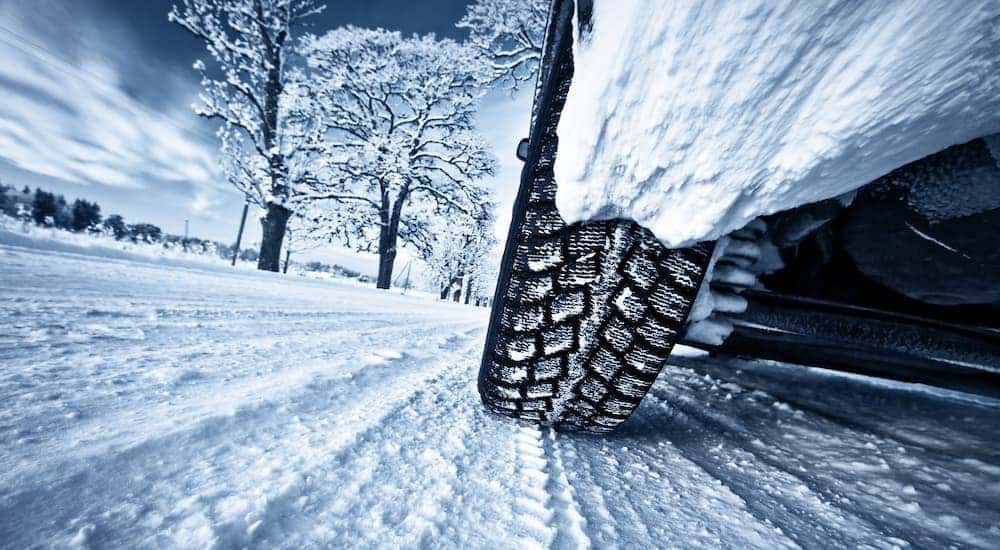
The first thing to know is that “winter tires” and “snow tires” are the same, so many people use their names interchangeably. We’ll refer to them as snow tires. These are recognizable by their three-peak mountain and snowflake stamp. They have treads that range in depth from 10/32 inches to 11/32 inches—deep and wide treads that will funnel slush, snow, and water away from your tires, giving them better contact with the road and thereby giving you better command.
Snow tires also work to compact the snow, which is why it’s best when everyone in town puts on snow tires in the winter. As people drive around on snow tires, they cumulatively compact the snow, flattening it to such a degree that it loses much of its slipperiness, thereby making the roads safer to drive on.
Many snow tires also have small studs made of either metal or ceramic; these break up ice, preventing dangerous slippery conditions. When you hear a vehicle with snow tires drive by, you can often hear the studs breaking up the ice. Snow tires are composed of a somewhat softer rubber designed to remain flexible in freezing temperatures; they are best for temperatures below 46 degrees Fahrenheit.
What You’ll Notice About Snow Tires
In modern vehicles, there are systems that will enhance traction in winter conditions—systems like stability control and traction control. These can detect when you’re driving on winter tires, which triggers them to do their job more effectively. So, overall, you will sense improved grip and contact with the ground when driving with snow tires.
Snow tires will also tremendously improve your stopping distance when driving on wet or snowy roads. You will find that you can stop at the expected pace when driving on snow tires. Alternatively, driving on all-season tires when it’s been snowing can lead to sliding and drifting when you attempt to brake.
It is also evident as a driver when you should not use snow tires. When the roads are dry, their deep treads and studs become noisy and create a bumpy and loud ride. You’ve likely heard snow tires drive by on dry roads and thought someone had a flat tire—the sound is that extreme! In fact, it’s why some places have regulations for when you can and cannot use snow tires. If you use them when they aren’t necessary, they can cause damage to the roads and cause premature wear on your tires, too.
When to Use Snow Tires
When the roads are completely obscured by powder, you should certainly have snow tires on. However, it’s best to even put them on before that happens. Once the temperature drops below 46 degrees Fahrenheit and you see that first powder fall, it’s time to put on your snow tires. Doing so on time can also prolong the life of your all-season tires, which can crack when the temperatures drop.
Get Your All-Season and Snow Tires Here
If you’re due for a new set of snow or all-season tires, visit us at Romeoville Toyota. We have a dedicated team of tire experts ready to help you select the ideal set of tires for your vehicle. We also offer promotions and specials on a regular basis to make tires affordable to Romeoville drivers on a budget.
We know what it’s like to drive year-round in this region, and we want to make sure our neighbors are safe on the roads. Plus, it’s important to us that our customers enjoy tires that last a long time. Using the right tires—at the right time of year—is an important part of that goal. Our experts are happy to switch out your tires when it’s time, give you tips on their proper storage, and examine your tires to tell you when it’s time to replace them.
Visit us to ensure you’re driving on the right tires for the time of year, all year long.

0 comment(s) so far on Snow Tires vs All-Season Tires: What’s the Difference? Do You Need Both?