

Seasons Change, So Should You: Comparing Summer and Winter Tires
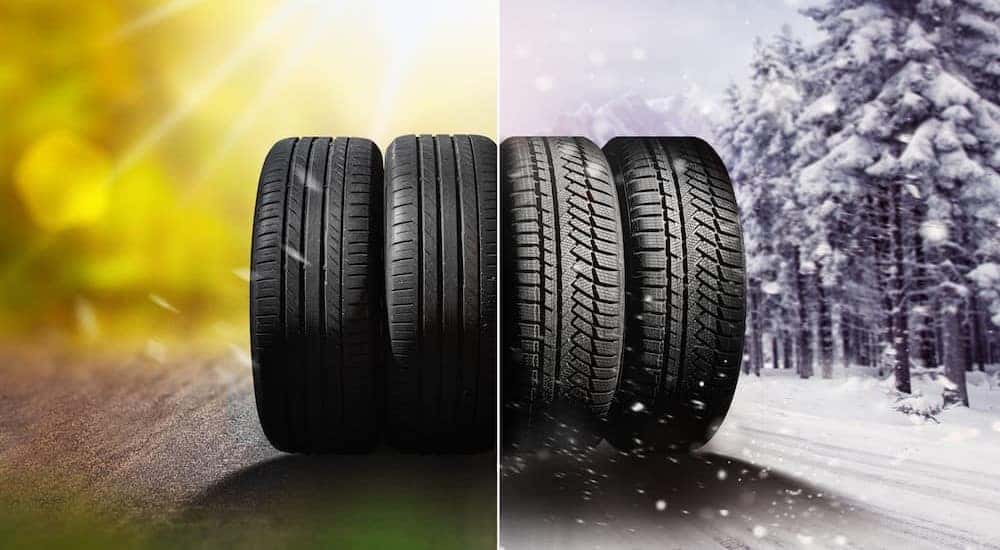
We all look forward to those tell-tale signs that herald the arrival of a new season: that hint of the foliage turning orange, the first fluttering of snowflakes, budding blooms sprouting from the earth, and that long-awaited day in the summer when you finally cave and install your air conditioner. The changing seasons not only bring about a change in mindset but also a change in wardrobe, from swimwear to sweaters, parkas, and sundresses. When it comes to outfitting your vehicle for the changing weather conditions, few things are quite as important as setting your vehicle up with the appropriate seasonal tires.
If you think about it, our cars, truck, and SUVs aren’t that much different from ourselves—you wouldn’t wear your favorite winter coat to a Fourth of July beach barbecue or show up for a ski trip in your new bikini—so why ask your vehicle to suffer through the season in the wrong set of tires? For some, it might simply be a matter of ignorance or lack of experience, but we’re here to help with our easy-to-understand guide that covers the difference between tire types. Before you head to your local dealership for a new set of Toyota summer tires for sale, take a few minutes to study up and learn how the right set of tires can have a major impact on your overall driving experience, comfort, and safety.
What’s the Difference?
Before we get into the specifics between summer, winter, and all-season tires, let’s take a moment for a little Tire 101. First off, not all tires are created equal; each type offers its own advantages and disadvantages. Generally speaking, modern tires fall into three distinct categories: summer tires, winter tires, and all-season tires. The differences between these may vary based on make and manufacturer, but generally speaking, there are two vital criteria across the three categories.
The first criterion is their tread pattern. To the casual observer, a tire’s tread pattern might look like nothing more than a fancy geometric decoration. However, they actually serve a fundamental purpose regarding vehicle control and safety; the grooves, bumps, and channels that make up a tire’s tread pattern can have a significant impact on handling, traction, and even the amount of noise a tire makes, which is why it’s so important to make sure your vehicle is properly outfitted for the coming season.
Tread patterns were actually one of the first advancements in tire technology, with Dunlop and Continental experimenting with the concept as far back as 1904. These early tread patterns were little more than subtle indentations and bumps on the rubber and canvas tires, which the tire companies marketed as anti-skid technologies. Firestone took the approach one step further in 1908, rolling out treaded tires with reverse molding that spelled out “Non-Skid” on the dirt or snow wherever they went.
The second criterion between different seasonal tires is the type of rubber compound used to produce them. While the less automotive-inclined among us might think that rubber is rubber, that really hasn’t been true for some time. Sure, there’s natural rubber in there, but it tends to make up less than one-third of the overall composition in today’s tires. The lion’s share of your tires is made up of various components—over 100 on average—ranging from synthetic rubber and steel to nylon, silica, polyester, petroleum, etcetera. These textiles, fillers, and cables are layered with the natural rubber to create a strong, versatile tire that will keep you rolling for up to 75,000 miles. It’s a long way from the simple rubber and canvas tires that graced the Model T.
DuPont would be the first tire brand to experiment with synthetic rubber, but they aren’t solely responsible for the tire as we know it today. Multiple companies toyed with the use of overlapping layers of fabric cords in the early 1900s—an advancement that not only protected the tires from punctures but also went a long way in improving comfort. Michelin would patent the radial tire in 1948, ushering in a sea change that would soon become the industry standard. Radial tires feature multiple layers of cord fabric and steel belts laid at a 90-degree angle to the wheel rim, which provide excellent tread life along with improved handling and less rolling resistance.
Summer Tires
Summer tires are all about performance, offering a level of traction and control that winter and all-season tires can’t match. As you might expect, this largely comes down to the tire’s composition and tread pattern. Summer tires are designed with a specialized synthetic rubber compound that provides unparalleled handling and grip in warmer temperatures.
Equally at home in dry or wet road conditions, summer tires have less rolling resistance than other designs, which improves fuel efficiency while reducing tire noise. This approach is ideal when the temperature is 45 degrees or above, but it begins to lose some of its appeal as the thermometer drops. In colder temps, the rubber compounds used in summer tires can become hard and brittle, reducing their ability to grip the road’s surface and making for a slippery ride.
Then there’s the tread pattern. Summer tires are built with wide treads, increasing contact with the road by nixing the deep grooves that make winter and all-season tires so effective at dispelling moisture. This increased contact with the road means that summer tires also tend to wear out quickly, which means they’re often a more expensive option in the long run.
On the plus side, summer tires have shorter sidewalls than other tires, reducing the flex you’ll experience while carving through a tighter corner. They might not be the most comfortable option on offer, but if you find yourself behind the wheel of a performance vehicle, you’ll appreciate the ability to slice through turns or stop at a moment’s notice. Summer tires are also usually rated for higher speeds than all-season or winter tires—186 mph as opposed to 149 mph for all-season tires—which is another factor that makes them the go-to choice for the sports car sect.

Winter Tires
Winter tires—also commonly referred to as snow tires—are the mirror image of summer tires. They’re designed to help a vehicle excel in wet, frigid winter conditions, and they can be one of the most important safety investments that any cold-weather driver can make. Again, this all has to do with a difference in tread pattern and tire composition. The compounds used to produce winter tires lean more heavily on natural rubber, which has less of a tendency to harden in cold conditions. This sort of flexibility is particularly important when braking, with winter tires offering drastically improved stopping distance under 45 degrees compared to summer tires.
Unlike summer tires, which prioritize maximizing contact with the road, winter tires are all about clawing through snow and ice and displacing water to prevent hydroplaning. Winter tires have a deeper tread pattern and more grooves than summer tires, making it easier for them to grip slippery surfaces. They’re also heavy on the sipes—the small, slit-like patterns on the tread that create more surface area and, in turn, better grip in winter conditions. Once upon a time, winter tires were knobby, off-road-like tires that were merely mounted to a vehicle’s drive wheels; however, advancements in tire technology have seen manufacturers adopt a more subtle design that’s a much better fit for everyday use.
They might be invaluable on a harsh February day, but winter tires do have a few drawbacks. First off, they wear out fairly quickly, especially when used in dry or warm conditions. Second, there’s the noise. A fresh set of winter tires will also be less fuel efficient and create a distinctive drone that will be noticeable to both passersby and the driver themself, making for a less-than-relaxing driving experience that can start to wear on your nerves.
Winter tires are also not subject to the Uniform Tire Quality Grading (UTQG) standard, which can make it difficult to compare them with summer and all-season tires. The UTQG grades tires based on their treadwear, temperature resistance, and traction—information you won’t be able to access for your winter tires. So when should you switch out your summer skids for a set of winter trawlers? While it largely comes down to a matter of taste and comfort, experts recommend holding off on switching out your summer tires until the temperature is routinely below the 40-degree mark.
Some drivers might be lucky enough to get away with running summer or all-season tires all year long, but for the rest of us, knowing the difference between summer and winter tires is a vital part of basic automotive safety. When it comes to their vehicles, drivers tend to fixate on a vehicle’s performance-related components, but it’s important to remember that those four tires are the only parts of the vehicle that actually make contact with the road. For this reason and a few others, tires should never be an afterthought or an aesthetic decision.
The right set of winter tires can make all the difference when you’re dealing with wet, icy, or snow-covered roads, giving you the traction and stopping power you need to make it to your destination in one piece. Summer tires don’t have quite as much of an effect on safety, but for those seeking an advantage in their performance vehicle, the improved control made possible by these sticky skids can mean the difference between a disappointing lap time and a new personal best.

0 comment(s) so far on Seasons Change, So Should You: Comparing Summer and Winter Tires