

Oil Changes 101: Class Is in Session

Do you know how often you need to change the oil in your vehicle? Do you know if your vehicle runs on synthetic or conventional oil? Your search for an “oil change near me” brought you straight to the experts here at Romeoville Toyota, your comprehensive automotive center.
Changing the oil in your vehicle is one of the most important responsibilities you have as a car owner. Luckily, it’s also one of the easiest services to complete. You can rely on our certified technicians to handle the job, or you can get everything you need from our parts department and do the work yourself from the convenience of your garage.
Whichever route you take, there are a few things you need to know about oil changes, like why they’re important, what changing the oil entails, and the difference between synthetic and conventional oil. That’s where we come in to help! Welcome to Oil Changes 101.
Oil Changes: Why They’re Important
The roar of your engine coming to life is far more than the turn of the key in the ignition or engaging the “Start” button from the driver’s seat; it’s the result of many moving parts working together. To operate effectively, those moving parts must stay lubricated. Otherwise, they rub against one another and cause friction, which increases the likelihood of damage or overheating. Think of this friction like the warmth you feel after rubbing your hands together quickly.
Oil changes are important when you understand the purpose that oil serves for your vehicle. It’s not only a lubricant, but it’s also a coolant and a cleaner. Here’s a breakdown of everything oil does for your vehicle.
Lubricates and Cools: Your engine’s pistons, valves, and many other components move against one another quickly to power your vehicle. Oil lubricates these components so that they can move without causing damage or intense friction. As oil lubricates, it also cools and reduces friction to prevent the engine from overheating.
Cleans: A lot like the “Mr. Clean” of your engine, oil picks up dirt and debris, both of which are detrimental to your engine and can lead to early corrosion. As oil picks up debris, it loses its effectiveness and eventually turns into sludge.
Boosts Efficiency and Longevity: If your engine’s moving parts aren’t properly lubricated, it forces the engine to work harder to do its job. This forces the vehicle to use more fuel and decreases the longevity of the engine by adding unnecessary wear and tear.

Synthetic Oil vs Conventional Oil
Do you know the difference between synthetic and conventional motor oil? While it may be surprising, engine oil is not all the same, and that makes it even more important to know what type of oil your vehicle needs to run its best. That information is easily found in your owner’s manual but making it all make sense starts here.
The oil you use in small tools like your lawn mower or weed eater isn’t the same as what you use in your vehicle, nor does every vehicle use the same type or weight of oil. For example, your 2020 Silverado 1500’s 5.3-liter V8 engine likely calls for SAE OW-20 full synthetic motor oil, while a 2021 Kia Telluride typically runs on SAE 5W-30 full synthetic. What do the numbers mean, and why is synthetic a better choice?
SAE stands for the “Society of Automotive Engineers” and reflects the coding system that designates the oil’s viscosity. Viscosity is how easily the oil pours at a certain temperature; lower viscosity oils pour easier at lower temperatures while thicker oils have a higher viscosity. Imagine viscosity like the difference between pouring warm maple syrup and trying to pour cold honey out of a bottle. Viscosity is important because it determines the strength of the oil and how well it reduces friction. If the oil is too thick and has a high viscosity, the engine has to work harder, and that reduces efficiency and increases wear and tear.
Synthetic oil optimizes your engine’s performance by using higher-quality oils than conventional motor oil. While conventional oil will lubricate your engine’s moving parts, it doesn’t do this as effectively as synthetic oil. This is because synthetic oils are chemically developed and have the exact qualities your vehicle needs, making it easier for the oil to combat sludge, reduce wear and tear, minimize friction, and actively prevent overheating.
Synthetic Oil vs Synthetic Blend
Diving deeper into the realm of synthetic oil brings up another question: “What’s the difference between synthetic oil and a synthetic blend?” Think of synthetic oil as a purebred dog and a synthetic oil blend as a mutt or a mix of breeds. Synthetic oil is chemically developed to have certain properties, while a synthetic blend is a combination of both conventional and synthetic oil. Don’t forget, however, that not all oils are created equal.
Synthetic blend oil is better than conventional oil and has some of the same properties as a full synthetic. Yet, the addition of conventional oils reduces the quality of the oil. This makes it harder to get the right blend of additives that are found in chemically-developed synthetic oil.
It’s Time for an Oil Change
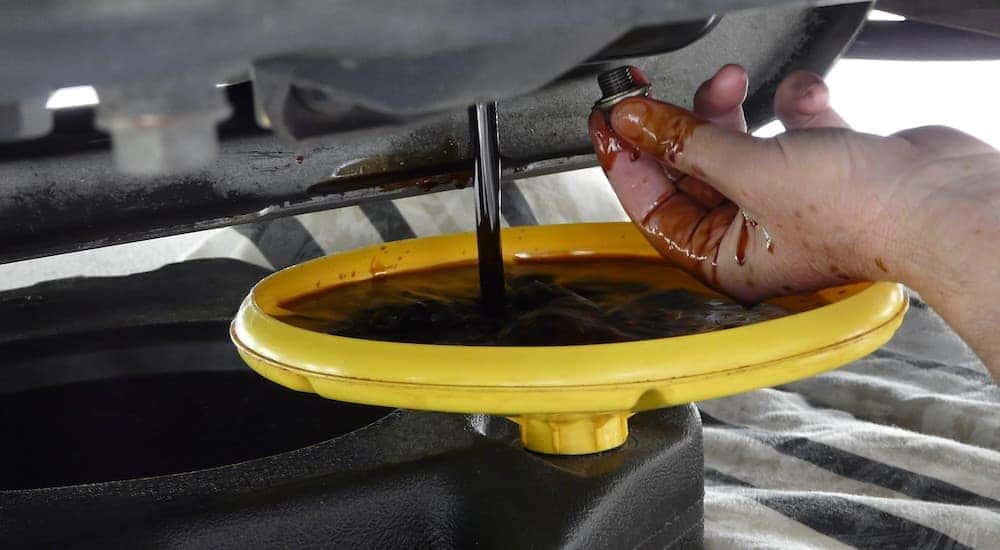
For years, industry experts recommended having your oil changed every 3,000 miles, reminding you with a handy sticker on your windshield. While the sticker may still be there, the interval is different, and that’s thanks to modern advancements in engine design as well as the introduction of synthetic oil. Now, your vehicle is smart enough to tell you when it needs an oil change with a convenient light on the dash or a notification in the driver’s digital instrument display.
Today, most vehicles are equipped with an internal system that monitors the quality and level of the oil based on your driving style, mileage, and driving conditions. For example, models like the 2018 Ford Edge display the remaining oil life as a percentage where 95% indicates you recently had an oil change while 15% indicates that you’re almost due for service.
If your vehicle isn’t equipped with this type of system or you’re interested in checking your oil level yourself, it’s easy to do and requires a quick look under the hood. Just park your vehicle on level ground, make sure the engine is cool, and locate the oil reservoir. Pull out the dipstick, wipe the oil from its end, and reinsert it into the reservoir. Pull the dipstick out and look at both sides to determine where the oil reaches. Some dipsticks indicate the level with pinholes, while others have letters or words like MIN, MAX, L (low), or H (high). As you look at the oil level, also pay attention to the color as healthy oil is black or brown and free of debris.
Oil Changes Made Easy
Your vehicle is your lifeline to family, friends, and the world outside. It gets you home after a long day at work, navigates your family’s annual vacation, and satisfies your sense of adventure on the weekend. It easily hauls your camping gear, transports hundreds of bags of groceries each year, and sees an endless array of snacks from your kids in the backseat. So, why wouldn’t you want to do everything possible to ensure your vehicle’s longevity and optimize its performance?
Routine oil changes do exactly that and are one of your responsibilities as a vehicle owner. The oil in your engine serves many purposes as it lubricates, cools, and cleans the many moving components to extend the life of the engine and maximize its efficiency. Ignoring that pesky “Change Engine Oil” light on the dashboard may seem convenient now, but it will certainly be costly later. Don’t learn that lesson the hard way.

0 comment(s) so far on Oil Changes 101: Class Is in Session