

Ignoring Oil Changes, or How to Destroy Your Car’s Engine
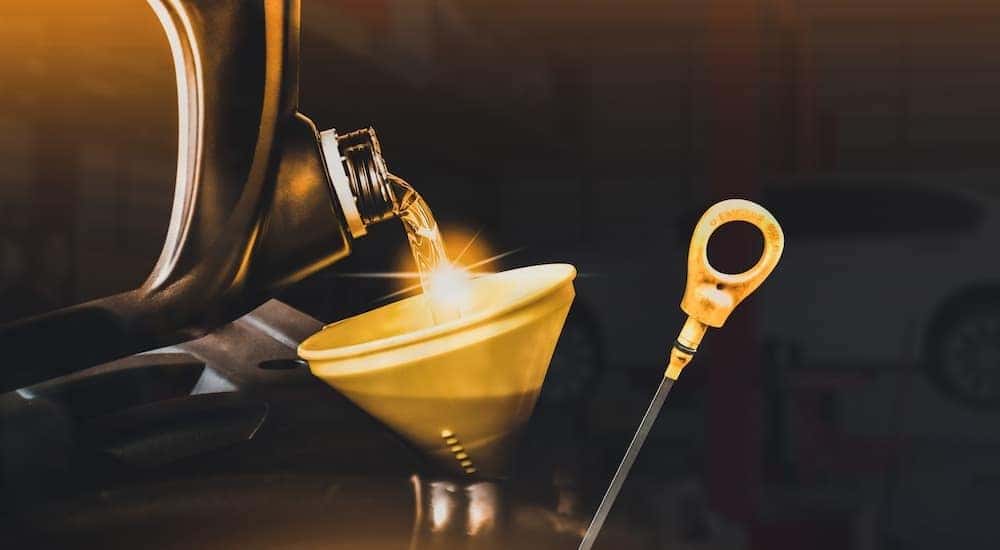
We’ve all been there: you’re driving down the street, maybe on your way to work in the morning or picking up something to eat for dinner, and that’s when your Check Engine light comes on. Or maybe you have a light specifically for when it’s time for an oil change—whatever the case, your next couple of days have just become a bit more complicated. The temptation, of course, is to put off dealing with that light for as long as possible; waiting a couple of days might be fine if it’s not something crucial, but once you’re flipping your calendar page to the next month, then you’ve taken things too far.
Whether you have a light telling you it’s time for a Toyota oil change or a general warning light that’s harder to decipher, the most important thing is that you respond to the warning as soon as possible. The warning lights are not reminders (though some vehicles do have specific reminder functions built into the gauge display or Infotainment system); they’re a sign that something is wrong and needs to be addressed. Putting off an oil change for a day or two is not a big deal, but going beyond a week can have dire consequences. Trust us: these are not things you want to learn the hard way, so let’s look at what can happen.
Loss of Performance and Efficiency
Let’s say you’ve pushed things a bit, and we’re not just talking about you having an oil change scheduled for yesterday that you had to skip; instead, we’re looking at a few weeks or so. If you haven’t done much driving, that might not be a big deal, but the mileage is just as important (if not more so) than time; if you drive a lot, your oil takes more abuse. The first thing that old oil will do is negatively impact your vehicle’s performance.
Your motor oil is there to lubricate your engine’s moving parts to ensure everything happens smoothly, as fiery explosions erupt numerous times each second while your car runs. Tremendous heat occurs inside your engine, but with good motor oil, the temperature stays well within what those parts can handle. As your oil gets older, it will get dirty, sludgy, and thicker, so it won’t lubricate all those parts. Since your engine has to work harder to do its job, you’re losing out on performance, and your car won’t feel as good.
In addition to this, since your engine has to work harder, it will also lose efficiency. Your car’s engine is designed to deliver peak performance and fuel economy with a perfect combination of fuel and air driving those explosions that propel you forward. When your engine doesn’t work at its best, it will take more fuel to get the job done, so your car will feel worse on the road in terms of acceleration and overall performance; plus, you’ll need gas more often. This isn’t catastrophic, but it’s completely avoidable, and things will only get worse from here.

Strange Sounds or Rough Handling
Let’s assume you’ve been ignoring the need for an oil change for a month or two, maybe even longer. During this time, your engine oil is getting dirtier and thicker, providing pretty lousy lubrication for your engine’s parts. At this point, your engine not only has to work harder to do its job and generate power for your vehicle, but it’s also starting to suffer. All those moving parts aren’t gliding easily; instead, they’re grinding against each other, and metal rubbing on metal is not a good thing.
Your engine is a finely tuned piece of machinery. Without good motor oil, all the work that auto engineers have put into it goes out the window. You’ll have a lot of extra friction building within your engine, which brings less efficiency and downright bad performance. At this point, you might start hearing strange sounds coming from your engine or even smell burning oil as things are getting too hot inside your engine. Performance won’t just be poor in terms of acceleration and power, but your engine might start misfiring, and you could feel rough handling due to the damage that is starting to occur under your hood. This is your last warning to change your oil, and for your sake, we hope you haven’t caused…
Engine Damage or Failure
Here we are at the ultimate punishment for not staying on top of your routine oil change: you’ve gone well past the point of poor performance, and you’re in catastrophic territory. Without your motor oil doing its job, excess heat within your engine will build to levels where the incredibly strong and durable components used in your block can no longer handle it. At this point, your best-case scenario is that the massive heat within your engine will cause it to blow a gasket; to be clear, that’s an expensive repair that involves rebuilding part of your engine.
The alternative is that your engine will fail entirely and seize up without oil to keep things lubricated and moving smoothly. This doesn’t mean the parts have just frozen; at this point, the heat has actually melted or otherwise warped the parts inside your engine to such a point that they can’t move anymore. There’s no simple fix or repair for this, not even an expensive one. You have two options now: a new engine or a new vehicle. Both options are expensive, and the worst part is that you could’ve avoided them with an oil change.
Voiding Your Vehicle Warranty
One last thing we’d like to note, as a dealership that cares about these sorts of things, is that failing to change your oil on a routine schedule can also void the warranty coverage that Toyota (or any other manufacturer) offers on their vehicles. A new Toyota comes with a 36-month/36,000-mile full vehicle warranty and a 60-month/60,000-mile powertrain warranty covering the engine and other parts. This is great because if your engine fails and needs to be replaced due to manufacturer error, you don’t have to pay for it.
On the other hand, if your engine dies and you fail to get your oil appropriately changed on the manufacturer’s recommended schedule, then your warranty won’t cover it. Even if your engine dies for reasons due to manufacturer defects, your warranty could be voided because you didn’t take care of oil changes, leaving you footing the bill. Why give up five years of engine coverage just to avoid sitting in the comfortable customer lounge at our service center for 30 minutes on a Saturday? Trust us: it’s worth your time.
Take Care of Issues When They’re Small
The golden rule of auto care is that you should take care of problems or maintenance when they’re small things that are easy and inexpensive to handle. This includes doing routine service on a set schedule, such as changing your oil, rotating your tires, getting new tires, and replacing other fluids as required. Most minor issues that come up have the potential to become so much bigger and far more expensive; giving up a little time and a small chunk of change to have your oil changed is infinitely preferable to being without your vehicle for a couple of weeks and paying a massive sum for a new engine. No matter what kind of work your vehicle needs, call or visit us at Romeoville Toyota, and we’ll take great care of it.

0 comment(s) so far on Ignoring Oil Changes, or How to Destroy Your Car’s Engine