

How to Care For Your Tires
Just got a new car and already wondering how to care for it? Car ownership entails responsibilities other than just fueling it and paying for insurance. There are key components that make your vehicle function at its optimal levels, chief among them being caring for your tires. Tires are the connection between your vehicle and the road. Without them, you’re not getting very far. Maintaining good habits is essential to keep your tires in good condition. Not only does it protect your wheels, but it also contributes to keeping you safe on the road.
Here at Romeoville Toyota, we understand how crucial it is to take care of those tires at every stage of car ownership. There’s more to it than just replacing your tires when the rubber has worn down. Caring for tires also involves maintaining good alignment and rotating your tires at the appropriate times. This will keep you safe and ultimately save you money. We’ve compiled a list of the most frequently asked questions about tire rotation and maintenance. If you’ve ever wondered about the ins and outs of tire care, or are on the prowl for Toyota tire rotation, Romeoville Toyota is an excellent place to start to keep your vehicle running like new.
FAQ About Tires
How Long Do Tires Last?
While multiple variables are responsible for inflicting wear and tear on your tires, leading to disparate lifespans, there are a few metrics we can look at to determine the average lifespan of a tire. With the majority of people driving an estimated 12,000 to 15,000 miles a year, and most tire companies offering warranties for tires to last roughly 50,000 to 80,000 miles, the median lifespan for a set of tires is three to five years.
It’s important to note that these figures are estimates and that how long your tires will last is a reflection of several things, including road and weather conditions, driving habits, maintenance frequency, tire quality, and whether your vehicle is front-wheel, rear-wheel, or all-wheel drive. According to tire manufacturers and safety advocates, a tire is considered worn out when the tread reaches a depth of 2/32 of an inch. At that tread, you should be looking at replacement.
What’s a Tire Rotation?
When you bring in your vehicle for a tire rotation, your tires are interchanged to different positions. This might mean your front tires are moved to the back, side to side, or even in a diagonal exchange. The purpose of rotating your tires is to help prolong the tread by creating more uniform wear across all four tires. When you promote a balanced wear and tear process, it extends the life of the tires and assists your vehicle in driving in a more predictable manner. Having tires that are worn down on one side of the vehicle can lead to dangerous slippage or, even worse, a loss of control. Remember, your tires are the only part of the vehicle that is touching the ground. If you can keep the wear even on all four tires, you can save yourself a lot of hassle by replacing them in a complete set of four. Finally, having an expert technician rotate your tires is an opportunity to have every tire checked for damage and air pressure.
How Often Do I Need a Tire Rotation?
As far as timing goes, rotating your tires should be based on manufacturer recommendations. Toyota models and their respective tires might have suggested rotation schedules; however, you can always check with our factory-trained technicians. On average, a tire rotation is recommended around the 3,000- to 6,000-mile mark to ensure the wear is spread out evenly across all four tires. Once your technician rotates your tires, they will also ensure your tire pressure matches the recommended amount for your vehicle.
Does Rotation Also Balance My Tires?
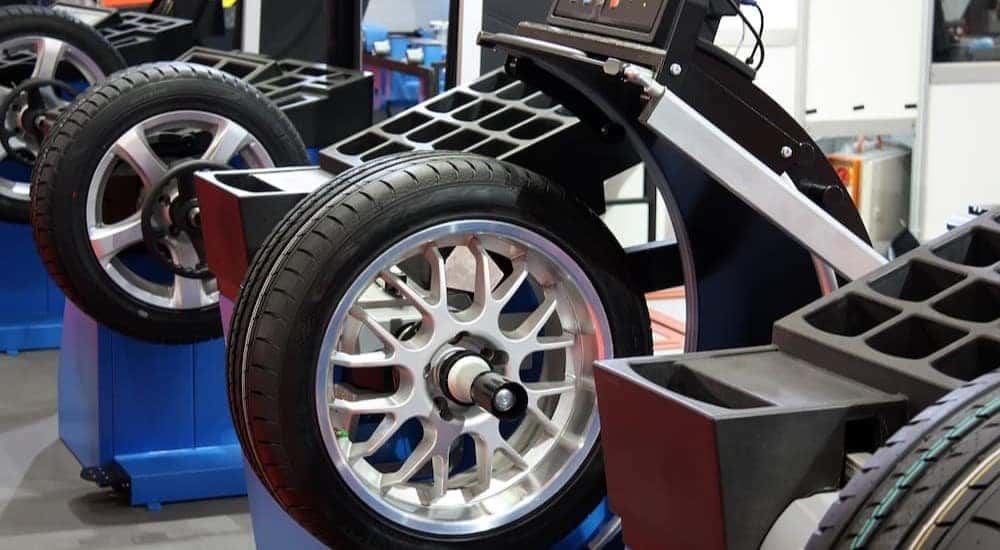
If you’ve heard of tire balancing service, you may be wondering what the difference is between that and a tire rotation. When a technician performs tire mounting and balancing, they do so by removing your tires, along with the wheels, then spinning the wheels using balancing equipment to ensure the weight of each wheel and tire are equal across the front and rear axles. The technician might then attach a weight on the opposite end of the tire to correct any discrepancy. Once the process is complete, they remount the wheels and tires.
You may need a tire balancing if you notice signs of steering wheel vibration—especially at high speeds—or any vibration of the seat or floor, or if you observe a cupped or scalloped wear pattern on your tires. This process can find imbalances with the tires and correct them for a reduction in tire wear, reduction of vibration, and assurance of safer driving conditions. While balancing can be done at the same time as a rotation, it is a separate service.
What’s an Alignment?
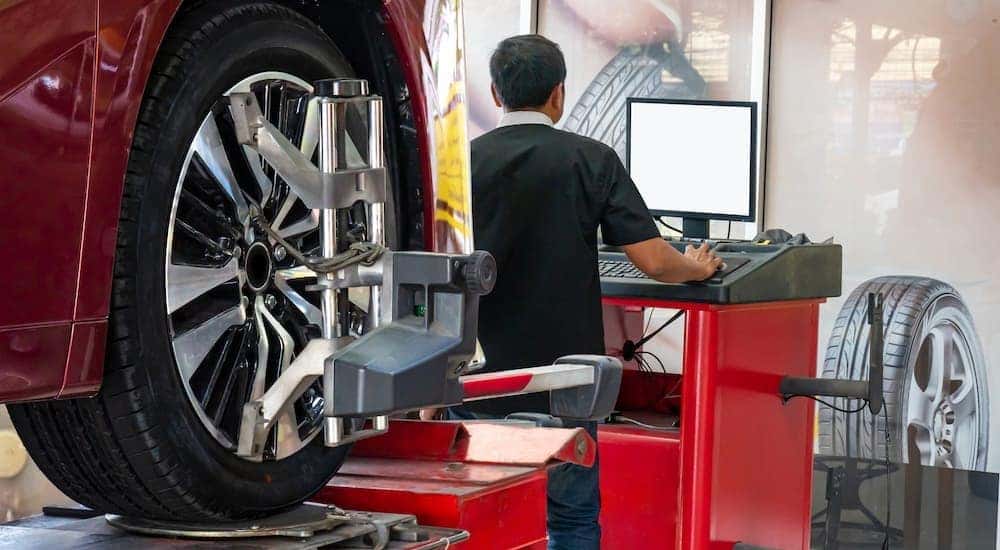
Another component of taking care of your vehicle is making sure you have proper wheel alignment. Your vehicle’s alignment might be suffering due to poor road conditions like potholes. The alignment can also be damaged by hitting curbs or getting into an accident. A sure way to know that it’s time for an alignment is if you notice your tires wearing unevenly or making noises while turning, if you feel the vehicle pulling to one side when your steering wheel is straight, or if the steering feels unstable in any way.
Getting an alignment will adjust the angle of the wheel, getting it back in line with your axles and chassis. This will prevent premature wear and tear on your tires and help foster safety. Many manufacturers recommend at least one four-wheel alignment a year, but it’s possible to need a front-end or four-wheel alignment sooner.
Can Tires Get Too Old for Rotation?
While rotations, balancing, and alignment are part of properly caring for your tires, sometimes they simply become too old and need a complete replacement. As previously mentioned, the average lifespan of a tire is three to five years or 50,000 to 80,000 miles. Many manufacturers offer up to six years of warranty. However, you should never go beyond ten years with the same set of tires, regardless of tread level. Once the tires are too old or the tread is too worn down, no amount of tire rotating will be enough.

Practice Routine Tire Maintenance
While we can’t fight the sands of time or the everyday wear and tear, proper tire maintenance helps you extend the life of your tires and help keep you safe on the road. According to research done by the National Highway Traffic Safety Association (NHTSA), drivers are three times more likely to be in an accident when tires are in bad condition. That’s why learning to recognize the signs makes a huge difference in safety. Inevitably, tires will age and lose their grip, but keeping pace with recommended maintenance through the fixed ops services we offer can gradually increase the lifespan of your tires and save you money. Through the simple act of getting routine tire rotations, wheel balancing services, and alignment when needed, you can protect your vehicle and keep extensive damage at bay. If you have any concerns, come by Romeoville Toyota as soon as possible and ask our technicians to take a look.

0 comment(s) so far on How to Care For Your Tires