

Dealing With Snow on the Go: Tips for Winter Driving

Fall is filled with fun seasonal activities like apple picking and pumpkin carving, but those falling leaves and crisp nights also mean that winter is right around the corner. We all know it’s coming, but preparing our vehicles for these challenging conditions often takes a backseat as we’re too preoccupied with Thanksgiving prep, holiday shopping, and other late-fall craziness. Winter in the Greater Chicago Area can be notoriously brutal, with the Great Lakes region experiencing an average annual snowfall of 37 inches—but a little preparedness goes a long way when mitigating the effects of cold-weather driving.
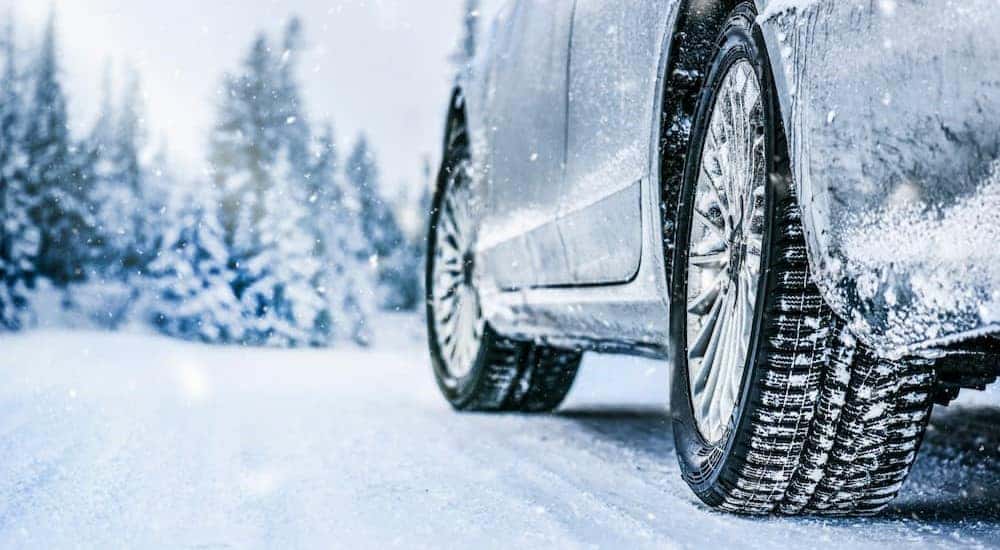
A good set of snow tires is an invaluable part of any winter driving arsenal but should really be seen as more of a first step than an all-in-one solution. From first aid kits and snow scrapers to shovels, road flares, and even kitty litter, a well-stocked vehicle can mean the difference between a minor inconvenience and a cold night on the side of the road. Don’t let snow flurries and icy roads sneak up on you; get ready for the white stuff with our guide to winter driving.
From winter driving safety tips and best practices to those essential emergency kit supplies that’ll come in handy when you find yourself sliding off the road or mired in a deep snowbank, we’ve compiled a brief overview that should keep you and your vehicle safe and secure, no matter how many inches Mother Nature decides to dump on you.
Winter Driving Gear
Ice Scraper/Snow Brush
A good combination of an ice scraper and snow brush is the cornerstone of any good winter-driving emergency kit. The ice scraper is a particularly important tool, as there really aren’t any worthwhile substitutes for breaking through that solid layer of ice coating your windshield. Sure, you could crank the dashboard heater and wait for things to thaw out, but who has that kind of time? Most ice scrapers will do a dandy job, though some cheaper versions might succumb to the stress a little quicker.
Remote Starter
The morning commute can be a challenging proposition in the best of times, but it’s made no easier when you have to deal with a chilly cabin and ice-covered vehicle before even leaving the driveway. Remote starters are a popular aftermarket upgrade for drivers in cold-weather regions and have increasingly become included as a standard feature on many late-model vehicles. Instead of braving the cold and furiously jabbing at icy windows, drivers can simply activate the remote starter system, take a few extra minutes with their morning coffee, and be greeted with a warm, cozy vehicle that’s ready for action.
Letting a vehicle warm up during the winter isn’t just a comfort issue; it can also improve the long-term health of your vehicle. Unlike older vehicles that were built with carburetors, modern cars, trucks, and SUVs don’t need an extended warm-up period—but a few minutes of idling can go a long way in ensuring consistent performance over time. This is mainly due to the fact that, as it warms up, motor oil becomes less viscous, allowing it to seep into every part of the engine where it’s needed.
A Shovel
This one should be pretty obvious, but every winter, you’re bound to see some ill-prepared driver knee-deep in snow and attempting to free their car with a snow brush, their hands, or whatever random backseat trash looked like it was up for the job. (Looking at you, fast food soda cup.) Investing in a small or collapsible snow shovel can make all the difference when you find yourself plowed in, and it should be an essential part of any winter driving kit.
Sand, Rock Salt, Cat Litter, or Traction Device
Traction is the magic word when it comes to winter driving. Even the thinnest layer of snow or ice can send a car skidding down the road or make it difficult to get going in the first place, which is why a small bucket of sand, rock salt, or cat litter makes such a valuable addition to any vehicle’s trunk. If you’re having trouble gaining traction, simply spread the sand, rock salt, or cat litter in front of the front wheels (in a front-wheel drive vehicle), step on the gas, and watch as the vehicle crawls forward.
When going the cat litter route, make sure to find a non-clumping product, as it’ll do a much better job of giving the road a little extra grit. As an added bonus, you’ll also leave a clean, fresh scent in your wake! If you feel like investing in a purpose-built tool, there are plenty of traction boards on the market, largely geared toward the off-road community; these bright orange pads are composed of hard, nubby plastic and can be slipped under your wheel to provide some much-needed traction. Your vehicle’s floor mats can also be used as a substitute in a pinch.
First Aid Kit
In most winter driving scenarios, you’re just a little hard work and elbow grease away from a solution—but when a real emergency strikes, it’s important to be prepared. If you live in a particularly rural area or find yourself trapped miles away from civilization, it can be hard to count on roadside service, the charity of passing motorists, or even an ambulance.
That’s why it’s so important to keep a well-stocked first aid kit in your vehicle at all times. In case of a particularly damaging crash, the gauze, bandages, and ointments that come in a standard first aid kit can help staunch the bleeding until proper medical assistance can be summoned, and many kits even include an emergency mylar blanket that’s vital for heat retention.
Blankets
Speaking of blankets, it’s also never a bad idea to keep a cozy wool or fleece blanket in your vehicle at all times. Conserving fuel could be an important consideration in some emergency scenarios, so it’s important to be able to stay warm without running the vehicle’s heating system.
Water and Snacks
If a snow-related accident isn’t resolved quickly, access to food and water can soon become an issue. Keeping your vehicle stocked with an emergency ratio of food and water can be a blessing for any accident, but it is especially pertinent during a winter storm when assistance could be slow to arrive.
Humans can survive for up to three days without water and up to seventy days without food, but even mild dehydration or hunger can cause a situation to spiral quickly. Short-term dehydration can lead to increased levels of anxiety and irritability, which can easily turn a simple accident into a full-on emotional breakdown. When it comes to snacks, opt for high-protein, non-perishable food such as unsalted nuts, raisins, peanut butter, or granola bars.
Jumper Cables/Starters
Jumper cables are a useful tool all year round, but especially in the winter. Sure, the dreaded dead battery isn’t unique to winter driving, but low temperatures make slow starts a lot more likely. There’s nothing worse than going to start your vehicle on a cold morning only to be met with a few half-hearted clicks, but the situation can easily be remedied with some jumper cables and the kindness of a passing stranger.
For drivers who live in less populated areas where these passing drivers are a bit of a rarity, jump starter packs can be worth their weight in gold. Basically, a large lithium-ion or lead acid battery connected to a familiar set of red and black jumper cables can bring a battery back to life without any assistance from a third party. These battery packs can be topped off at home or, in many cases, powered directly by the vehicle’s auxiliary power outlet once the vehicle is up and running. Available for as little as $50 to $100, starter packs are often cheaper than roadside assistance and take a lower toll on a driver’s pride than the “ask a stranger” option.
Road Flares/Reflective or LED Signals
Visibility is a common problem when it comes to winter driving and is especially important when you’re stranded on the side of the road. When the snow is falling, it’s all too easy to lose sight of what’s ahead of you, including other vehicles.
If you’re stuck in the snow on the road—especially at night or during a heavy storm—laying out reflective/LED signals or good old-fashioned road flares should be the first thing on your agenda. No roadside emergency was ever made better by another [easily avoidable] roadside emergency, so protect yourself and other drivers by keeping your vehicle stocked with appropriate signaling gear.
Half a Tank of Gas
With gas prices being what they are, it can be tempting to keep your tank running a little leaner than it otherwise might. We get it, but this approach can quickly turn on you should your vehicle end up getting the brunt of winter’s wrath. Keeping half of a tank of gas in your vehicle at all times is a good idea as it’ll put less strain on the fuel pump, but it’s particularly important during the winter.
If help is slow to arrive and the thermometer starts to drop, you’ll be happy that you bought yourself a few extra hours of warmth. It’ll also come in handy when you’re trying to rev your way out of deep snow, as this sort of acceleration tends to mean burning through gas at an accelerated pace.
Extra Winter Clothes
Keeping an extra pair of gloves, a hat, and even a winter coat in your vehicle can pay dividends should you find yourself stranded on the side of the road for an extended period of time. You might think you can skip out on wearing a heavyweight jacket if you’re commuting to work or headed for an indoor destination, but winter driving conditions can quickly throw a wrench into the gears, making appropriate clothing a must-have for any winter journey.
If you’re regularly traveling with family, make sure to keep the vehicle fully stocked with everything you might need to keep everyone cozy—because a backseat full of cold, irritable kids isn’t going to make the experience any more pleasant.
Winter Driving Tips
Clear Your Windshield
We’ll take this opportunity to remind you that a half-cleared windshield is a danger to you and any other drivers you might encounter on the road. Spending a few extra moments to thoroughly clear your windshield of ice and snow before setting off can make a big difference in overall visibility, which is particularly important when the snow is still falling. It’s not only a good idea, but in many places, it’s the law. Rules vary by state, but most jurisdictions have some sort of rule against driving with snow-caked windshields and side windows.
Beware Black Ice
Snow- and ice-covered roads can make for a hazardous journey, and things get no easier when you can’t even spot the ice in the first place. Black ice is the bane of all winter drivers, glazing roads with a slippery surface that can be practically invisible in some circumstances. Black ice tends to be a little darker and less reflective than the surrounding road, so keep your eyes peeled for any particularly suspicious patches of asphalt.
Don’t Trust AWD/4WD
All-wheel or four-wheel drive vehicles might be a little more rugged than their two-wheel drive counterparts, but they’re not magic. AWD and 4WD can accelerate without slipping, thanks to power being sent to all four wheels, but such vehicles don’t actually have more traction than your standard 2WD model. This misunderstanding can lead to a dangerous level of overconfidence in drivers, who assume that their AWD or 4WD vehicle isn’t susceptible to the same forces of physics as every other vehicle on the road when turning and stopping in slippery winter conditions.
Change Your Habits
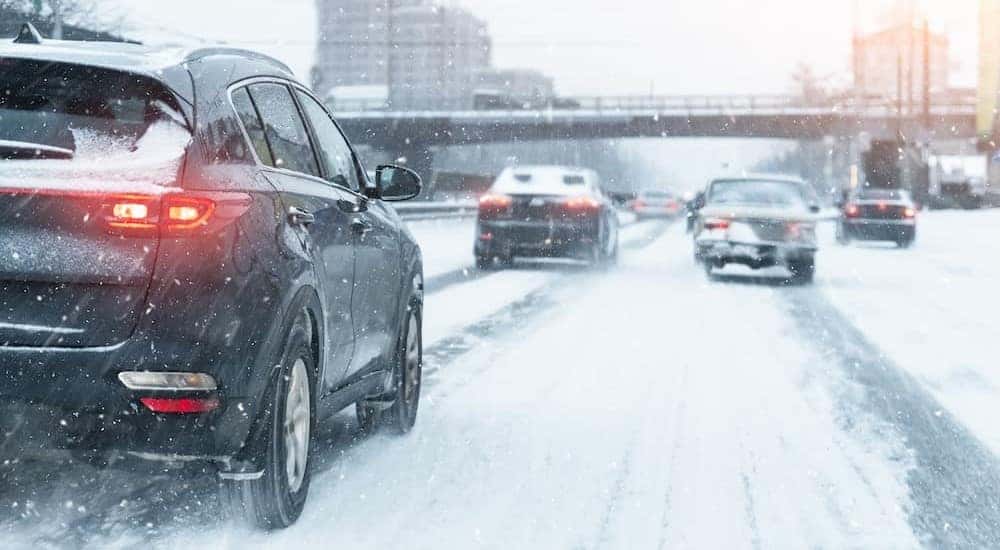
Some of those tried-and-true driving axioms tend to go right out the window when winter conditions hit. Take the following distance, for instance: You’ve probably heard the old rule about keeping one car length between yourself and the vehicle ahead for every 10 mph of speed—but that formula changes a bit when the roads start to get slick and effective braking distance starts to grow.
When snow and ice hit, try upping the following distance to around one-and-a-half car lengths for every 10 mph, as it’ll give you more time to avoid an accident should the leading driver slam on the brakes.
It’s also a good idea to bypass your vehicle’s cruise control during inclement weather. These systems can make some funny choices about when to brake and accelerate, which could cause some trouble when the snow starts to pile up. Slow, steady acceleration and deceleration will help prevent any unwelcome surprises, though when driving uphill, you’ll want to keep a healthy pace and avoid stopping if possible.
Avoid the Fumes
If you’re stranded on the side of the road and waiting for help, you’re probably going to want to periodically run your vehicle to stay cozy. There’s nothing wrong with that, just as long as you’re being mindful of carbon monoxide poisoning. Before starting your vehicle, check to make sure the exhaust pipe isn’t buried in snow; this would cause the exhaust fumes to back up into the engine block and then come through the cabin air vents. If you feel yourself getting sleepy or disorientated or you start developing a headache, shut off the vehicle, step outside, and get a little fresh air—and double-check your tailpipe!
Skidding 101
Skidding is an inevitable part of winter driving. No matter how careful you are, you’re bound to experience the unsettling sensation of having your vehicle decide to go its own way without any driver input. It can be scary, but there are a few simple tips to keep in mind to escape unscathed.
In a front-wheel drive vehicle, let your foot off the gas when you begin to skid—and once you’ve regained traction, point the wheel in the direction you want to turn. You should begin to straighten out.
In a rear-wheel drive vehicle, you’ll want to turn the steering wheel in the same direction that the vehicle is sliding while letting your foot off the accelerator and avoiding the brakes altogether. Once you feel the vehicle regain traction, point the wheel where you want to go, and you’re back on your way.
Preparing for Winter
When you’re traveling over the river and through the woods to visit grandma this holiday season, make sure you keep these winter driving tips and emergency supply recommendations in mind. From keeping your gas tank at least half-filled to packing blankets and water, investing in remote starters, having the right tools for the job is essential when navigating the snowy, icy roads of winter.
If you’re the parent of a new driver, use the early winter season as a learning opportunity. A few minutes in a snowy parking lot can pay dividends when your new driver later finds themselves sliding down an icy road at night. Expose your teen to the best winter driving practices and get them some experience before the snow really starts to build up.
Winter driving might be a little riskier than your average Sunday cruise, but with the right equipment, mindset, and driving techniques, it’s easy to avoid the worst outcomes.

0 comment(s) so far on Dealing With Snow on the Go: Tips for Winter Driving