

Charged Up: The Check Engine Guide to Jumpstarting Your Vehicle
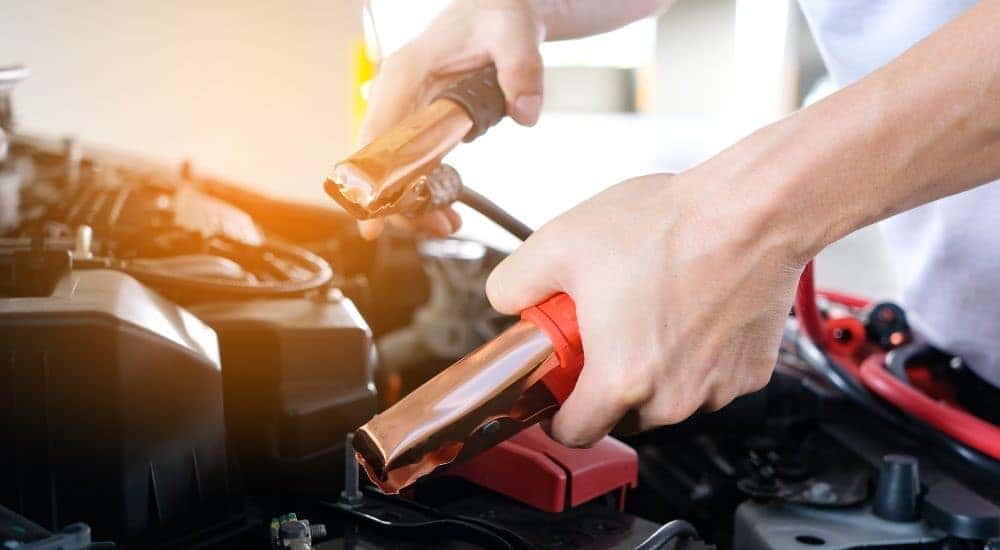
Whether it’s due to cold weather, lack of regular use, or leaving your lights on overnight, it’s never fun to try to start a vehicle only to be met with a few half-hearted clicks. In some cases, this situation might call for the sort of wholesale substitution that’ll have you frantically searching the web for “battery replacement near me,” but most of the time, it can all be solved with a simple jumpstart—but just how simple is it?
From digging out jumper cables and remembering how everything is supposed to be hooked up to finding another vehicle to breathe a little life back into yours, jumpstarting a vehicle can be a hassle, so a short refresher always helps. Learning how to jumpstart a vehicle isn’t that difficult, but a surprising number of drivers struggle with this basic aspect of car ownership.
So what’s a driver to do when they encounter the dreaded dead battery? How often can you jumpstart a vehicle, and how are drivers supposed to keep a battery in working order when their vehicle is stored away for an extended period of time? We’ll answer all that and more as we dive into the finer points of jumpstarting…
Where to Begin
Jumpstarting a battery is an important skill for any driver, but depending on the situation, it’s not as easy as it might sound. If you find yourself plagued with a dead battery while you’re in a busy parking lot or your own driveway, finding another vehicle to jumpstart your car can be as easy as flagging down a passerby or borrowing the keys to your partner’s vehicle. But what about those times when there aren’t any other drivers around to help out?
For those who’re enrolled in a roadside assistance service like AAA, this shouldn’t be much of a hassle; simply connect with an agent, provide your location, and a truck will typically show up within an hour or so. These programs usually cover four roadside assistance service calls per year, but after that point, things can start to get a little pricey, with AAA charging between $50 and $100 per jump after you’ve worked through your freebies. Luckily, there are plenty of ways to avoid paying those inflated prices, with lithium-ion battery packs and home chargers representing an affordable alternative to out-of-pocket roadside assistance.
Ringing in for as little as $30, a home battery charger/maintainer can not only help to revive a dead battery but can also be used to recondition a battery that’s having trouble holding a charge. They’re not the quickest option on the market, but these chargers/maintainers are also a great resource for those seeking a safe and affordable way to keep their battery charged when a vehicle is out of commission or being stored away for the winter.
For those seeking an effective on-the-go alternative, portable charger packs represent an enticing option. These are a relatively new addition to the market, having become increasingly practical in recent years thanks to a steady supply of affordable, effective lithium-ion batteries. They’re essentially a car battery and jumper cables are all rolled into one, and they’re used in almost exactly the same way. As a bonus, many of these charger packs can also be used to charge any number of personal electronics with built-in USB ports that allow you to top off your smartphone, camera, drone, Nintendo Switch, etc.
How to Jump
So you’ve found a helpful stranger to lend a hand, roused your spouse out of bed, or dug the portable charger pack out of your trunk—what’s next?
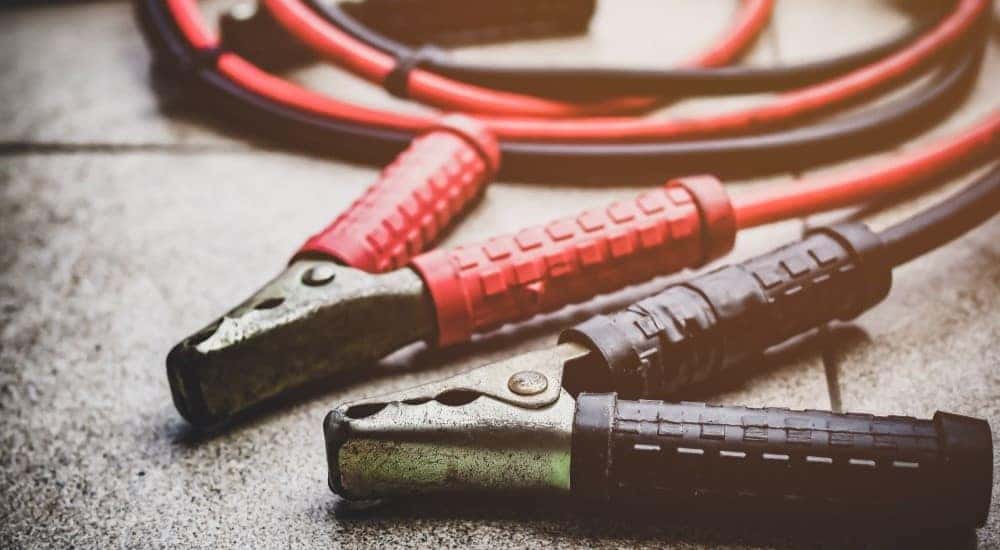
First, start by parking your dead vehicle and the donor—the term we’ll use for the vehicle you’ll be charging from—as close to each other as possible. Parking side-to-side will work in most cases, but if your jumper cables are too short for the task, you might have to go for the nose-to-nose approach. If both you and the driver of the donor vehicle have jumper cables, but neither set is long enough, you can always attach both sets together to make one longer set; if you opt for this method, ensure the cables aren’t touching water, metal, or any part of the vehicle where the two sets clamp together.
Once you’ve ensured both vehicles are in ‘Park’ and turned off, pop the hoods, locate the batteries, and grab a set of jumper cables. Untangle the cables, locate one of the red clamps, and attach it to the positive terminal of the dead battery, which will usually have a plus sign or red markings. Next, attach the red clamp on the other end of the cable to the positive terminal on the donor vehicle, and then attach the adjacent black clamp to the donor battery’s negative terminal.
Lastly, take the remaining black clamp and attach it to any unpainted metal surface in the engine bay of the vehicle with the dead battery—preferably as far from the battery as possible. This order might seem arbitrary, but it’s all about safety; connecting the jumper cables in the wrong order could easily cause sparks to fly, and not in a fun way.
Now, it’s time to let the donor vehicle do its thing. Step away from the vehicle with the dead battery and have the driver start up the donor vehicle. Let the donor vehicle run for a few moments before attempting to start the dead vehicle. If it doesn’t start right away, don’t worry; the average dead battery can take three to five minutes to charge, and in some extreme cases, it can take as long as 30 minutes.
Sometimes, a battery will be past the point of recharging, and no amount of time spent fussing with jumper cables is going to make any difference. The good news is these types of terminal failures don’t happen out of the blue, so chances are you’ll have plenty of warning that a battery is on its last legs.
When you get the vehicle with the dead battery started, don’t celebrate just yet. Let the vehicle run for a few minutes to allow the alternator to charge the battery, or better yet, go for a leisurely 15-minute drive.
How Often Is Too Often?
Jumpstarting a vehicle is easy, but is it too easy? Is there such a thing as jumpstarting your battery too often, and are there any long-term consequences drivers should be aware of? The answer is generally “no,” but the issue can be a little more nuanced.
Continually relying on a jumpstart isn’t going to do any real harm to your battery, but a healthy battery also shouldn’t need such frequent charging. If you find yourself whipping out the jumper cables three times a week—especially in the warmer months—it’s a sign that your battery is on its way out, or it could indicate an issue with another part of your vehicle’s electrical system, such as a faulty alternator or starter.
Fussing with jumper cables or having to ask strangers for help isn’t that much of a chore every once in a while, but if you’re making it an everyday occurrence, dropping $150 on a new battery might be a wise investment. If your vehicle has some slow, tough starts in the winter, the issue might not be quite so dire as low temperatures tend to drain batteries, but it could be a wake-up call to invest in a battery with a higher cold cranking amps (CCA) rating. The higher the CCA, the better a vehicle is at starting in low temps, so make sure to take note of the CCA if you live in an area that truly experiences all four seasons.
How to Keep Charged
Generally speaking, a driven vehicle is a healthy vehicle. Long periods of inactivity can wreak havoc on any number of components within the vehicle, from tires that go flat or become warped to rusted brakes, broken fuel pumps due to expired gas, air filters stuffed with a hibernation’s worth of acorns, and—of course—dead batteries. A little pre-storage maintenance can go a long way in ensuring that your vehicle springs right back to life when it’s time to take it back out, so let’s look at some of the best ways to prepare your car for its own hibernation.
Remove the Battery: The simplest and most foolproof way to guarantee that your battery survives storage is to simply remove it altogether. A disconnected battery is still going to lose some juice over time, but it’ll happen much more slowly than it would if it were still connected to the vehicle. If you decide on this method, make sure you have a dry, well-ventilated area that’s between 40 and 60 degrees where you can keep the battery. For best results, buy a battery box that will protect the battery from contamination like moisture and dirt—as well as light—while it’s in storage.
Disconnect the Negative Terminal: If you don’t have a good place to store your battery or simply don’t want to lug it around the house, you can also disconnect the battery’s negative cable. This accomplishes the same thing as removing the battery entirely and might be a better option for some drivers. There are a few things to keep in mind; for one, removing the cable—like removing the whole battery—will cause your vehicle’s electrical systems to reset, which will mean reprogramming your favorite radio stations, clock settings, and other functions that require a steady stream of power. You’ll also want to make sure that the disconnected negative cable doesn’t touch the battery, so grab a zip-tie or elastic to keep it in place. No matter what you do, don’t disconnect the positive battery cable, as reconnecting this live wire elsewhere is much more likely to cause damage upon contacting other components under the hood.
Use a Battery Maintainer: As we mentioned earlier, a battery charger can be very helpful in keeping your battery charged during a long period of inactivity. Designed to charge your battery to an optimal level, using a battery maintainer is as easy as attaching clamps to the positive and negative terminals, plugging the maintainer into a wall outlet, and letting it sit until you’re ready to throw it back under the hood. Battery maintainers can be found for as little as $30, making them a worthwhile investment for any driver looking to maximize their battery’s health.
Drive Your Car: Of course, the easiest way to make sure your battery is always going to start when you need it to is through regular use. Driving your vehicle for as little as 30 minutes a week can make all the difference for long-term battery health, though it’s a bit more time-consuming than some of the other options listed here.
Care for Your Battery, Because It Cares for You
When it’s well-cared for, the typical car battery will last for between three to five years—but there are no guarantees. Sometimes, all it takes is one night of an overhead light being left on or some low winter temperatures to sap every last volt from your battery, leaving you late for work and tangled up in jumper cables.
Familiarizing yourself with the basics of jumping a car battery is one of the easiest ways to avoid this sort of worst-case scenario, and it’s an important part of any driver’s automotive education. While most jumper cables include printed instructions that lay out every step of the charging process on a plastic tag, it never hurts to do a little refresher now and then.
Sometimes it’s hard to avoid a dead battery—especially when you’re not driving your vehicle for an extended period—but there are plenty of ways to keep your battery in tip-top shape in these situations. Hopefully this guide has gone a long way in demystifying the jumpstarting process because, as every driver knows, there’s nothing worse than sitting on the side of the road for an hour, waiting for the AAA truck to show up.

0 comment(s) so far on Charged Up: The Check Engine Guide to Jumpstarting Your Vehicle