

Car Maintenance 101: Vehicle Alignment
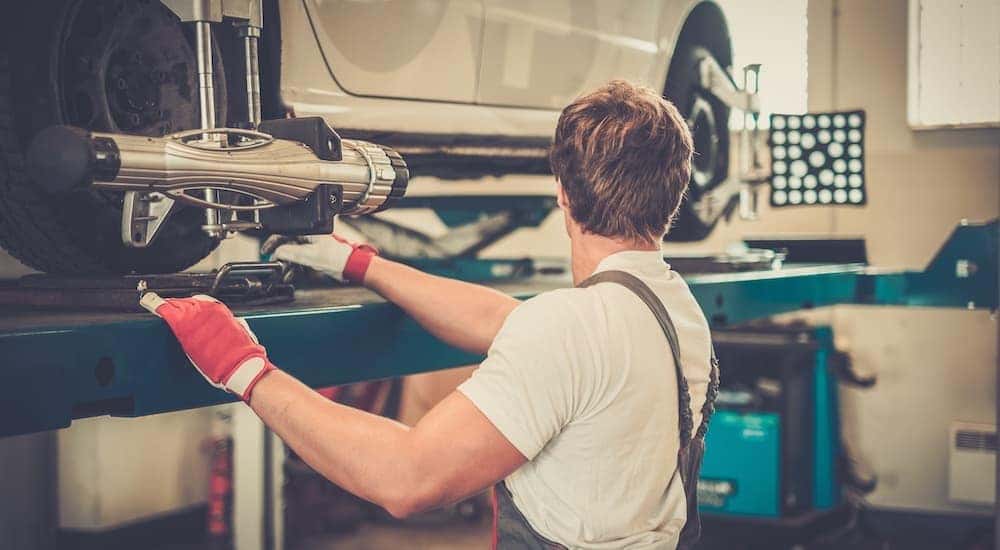
You’ve noticed that your vehicle isn’t handling quite right. The tread on your tires is wearing quickly and unevenly while the vehicle itself is pulling to the left despite the fact that you’re steering straight ahead. These problems suggest that it’s time to start your search for an auto alignment near you. Fortunately, that search starts and ends right here with Romeoville Toyota, your comprehensive automotive center that can handle all your maintenance needs.
But what exactly is an alignment, and how will it fix your vehicle’s performance? Is it something that needs to be done routinely, like oil changes and tire rotations? What does the alignment itself involve? These are just a few questions we’ll answer as we dive into the basics of vehicle alignments and show you why you can and should put your trust in our certified service technicians.
What Is an Alignment?
You’ve likely heard an alignment referred to as a tire or wheel alignment. This is misleading since the alignment itself doesn’t involve your tires or wheels. Instead, it looks at what connects your vehicle to its wheels–the steering and suspension. During an alignment, our mechanics use state-of-the-art alignment machines that rely on a computer to precisely measure the angle of the wheels in relation to the axles. The technician ensures the steering wheel is centered and adjusts the angles of the suspension–camber, toe, and caster–based on the manufacturer’s recommendations for your vehicle.
Since your tires are your vehicle’s only point of contact with the road, it’s vital to ensure the camber, toe, and caster angles are exact. These angles ensure your vehicle’s performance but, more importantly, your safety behind the wheel. So, what exactly are these angles?
Camber
Stand in front of your vehicle facing the hood. Now, imagine a line running north and south, passing through the center of your tires. This is the centerline. Camber is the inward or outward angle of the tire from the centerline. A negative camber pushes the tire inward while a positive camber pushes the tire outward, both of which can be caused by worn ball joints, bearings, and suspension components. When the camber is misaligned, the tire tread is worn significantly more on the inside or outside than in the center.
Toe
To understand toe angle, stand up and look at your feet. When you point your toes inward toward one another, this is known as a toe-in alignment and is the same when looking at your vehicle’s tires from a bird’s eye view. When you point your toes outward with your heels closer together, this is a toe-out alignment.
A misaligned toe angle can lead to feathering or heel/toe wear. Feathering occurs when the tread is smooth or worn down on one side but sharp or “like new” on the other. Heel/toe wear affects the tread blocks or the individual sections of the tread and occurs when one side of the tread block wears unevenly or faster than the other. This uneven wear is not only a sign of misalignment, but it’s also an indicator that your tires might be overinflated or underinflated.
Caster
Stand on the driver’s side of the vehicle at your front tire and imagine the same centerline running north and south through the tire; this is the basis of your steering axis. Caster angle is the angle of your steering axis from the side of your vehicle. A positive caster means that the steering axis tilts toward the rear of the vehicle, while a negative caster means the axis tilts toward the front bumper. Caster is important because it balances the steering and ensures the vehicle’s stability and how it performs when cornering.

Signs You Need an Alignment
- New Tires: Have an alignment done after you purchase and install new tires, as this can extend their longevity.
- Accident: Hard impacts can throw your vehicle’s alignment off-center, which is why we recommend having an alignment done following a significant impact, whether it’s caused by an accident, hitting a deep pothole or curb, or driving over debris in the road.
- Vehicle Pulling to One Side: This is noticeable when you’re steering straight ahead, but the vehicle pulls to the left or right. This can also cause a vibration in the steering wheel.
- Uneven Tread Wear: Since tire angle is vital to your vehicle’s alignment, uneven tread wear is a great indicator your vehicle is misaligned. Just ensure that the uneven wear isn’t caused by imbalanced or underinflated tires.
- Frequent Towing: Frequently towing heavy loads adds stress to the shocks, struts, springs, and bushings that can cause your tires to wear unevenly and misalign your vehicle.
- Lift or Lower Vehicle: Since lifting or lowering your vehicle affects the steering and suspension, it also affects the caster, camber, and toe angles, which means an alignment is necessary following these modifications.
What Are the Benefits?
#1 Save Money on Tires
One of the biggest benefits of having your vehicle regularly aligned is the money you’ll save on tires. Since misalignment leads to uneven tire wear, this shortens the life of your tire and forces you to buy new tires more frequently. With routine alignments, you’re ensuring your vehicle is aligned and the tires are wearing evenly.
#2 Save Money on Fuel
Did you know that misaligned tires can reduce your vehicle’s fuel efficiency by 10 percent? When your vehicle isn’t properly aligned, the tires drag rather than roll smoothly on the road. This forces your vehicle to work harder and, in turn, consume more fuel.
#3 Improved Ride Quality
Anytime your vehicle doesn’t steer properly, it leads to more stress behind the wheel and diminished ride quality. When your vehicle pulls to the left or right, you steer against the pull to keep the vehicle safely centered in its lane. This not only causes added fatigue to your experience behind the wheel but also leads to poor ride quality as the vehicle jars and vibrates along the roadway.
#4 More Control Behind the Wheel
As we mentioned, steering a misaligned vehicle can be stressful and increase fatigue in the driver’s seat as you struggle to find the perfect angle to keep the vehicle safely in its lane. Beyond fatigue, the situation also poses a threat to your safety because it reduces the control you have over the vehicle. For example, think about having to steer to avoid a collision ahead of you. You have to take into account the misaligned steering, which leaves a small margin of error when every second counts.
Your Role in Your Vehicle’s Alignment
Do you realize that you play a role in your vehicle’s alignment? While many situations like accidents are often beyond your control, there are several things you can do to proactively avoid or remedy misalignment. This starts by driving less aggressively and giving yourself enough time to get from Point A to Point B, minimizing the potential for accidents as well as hitting curbs or potholes.
Keeping an eye on your tires is also a great way to prevent misalignment. Most vehicles come with a tire pressure monitoring system that alerts you to low air pressure in your tires. This ensures you’re always driving on properly inflated tires; however, it doesn’t take into account overinflation, which is also detrimental to your safety and the longevity of your tires. Check your vehicle’s owner’s manual for the recommended pressure and remain vigilant about monitoring your tire pressure especially before long trips.
Knowledge Is Power
Knowing the signs of misalignment is vital to your safety on the road. Alignments also extend the life of your tires, put more money in your wallet by improving efficiency, and optimize your vehicle’s performance and ride quality. As we tell our customers, knowledge is power, and we’re here to empower you throughout your journey with insight into every aspect of buying and owning a vehicle.

0 comment(s) so far on Car Maintenance 101: Vehicle Alignment