

A Guide To Replacing Your EV’s Battery
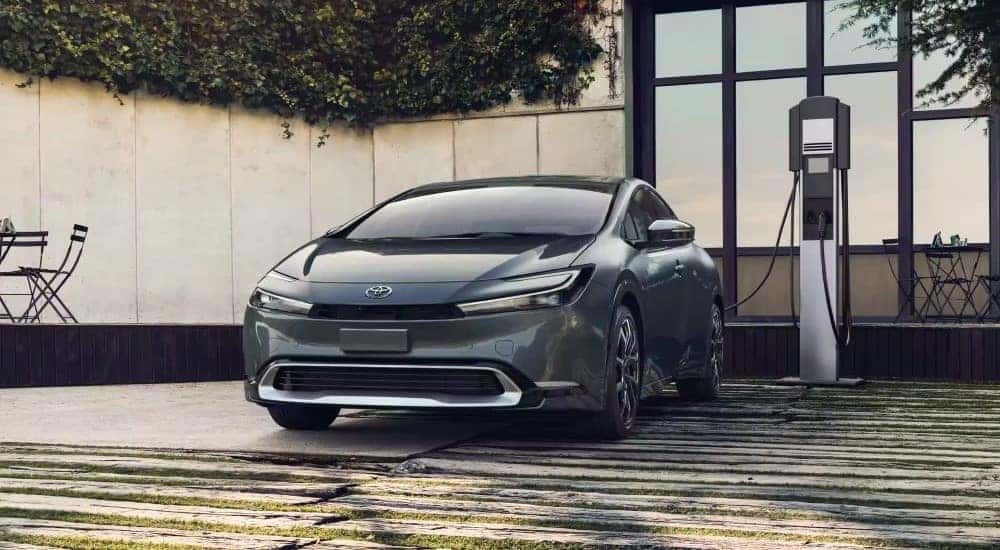
Aside from the obvious environmental benefits, there are several strong reasons to choose electric vehicles (EVs) over their gas-powered cousins. From government tax incentives to their low cost of operation, EVs provide a tempting new alternative for drivers looking to make their bi-weekly gas station visits a thing of the past. That said, there is still one major hurdle to widespread EV adoption: the cost of the battery.
Drivers who’ve become accustomed to their gas-powered vehicles tend to be scared off by the prospect of having to replace a pricey EV battery, but a quick internet search for “battery replacement near me” suggests that this concern might be a little overblown. Most studies have found that only around 1.5% of EVs on the road today have had a battery replacement, which undercuts one of the major arguments against the segment.
Some drivers might still take issue with the fact that an EV’s lithium-ion battery might need to be replaced at some point during the vehicle’s life, but no matter how you look at it, they’re still a great value. A quick comparison with traditional gas-powered vehicles illustrates just how affordable EVs can be. According to one study, an EV will cost around $45 per month in maintenance—$550 a year—if driven the average 15,000 miles. Internal-combustion engine (ICE) vehicles, on the other hand, cost twice as much on average, with a monthly maintenance bill of about $100 (or $1,300 a year). So why the big discrepancy?
It largely comes down to the relative simplicity of the EV’s engine, which averages around 20 moving parts to an ICE vehicle’s 2,000-plus. With 100 times more engine components than an EV, an ICE vehicle has 100 times the opportunity to break down, leaving drivers with an expensive fix that’ll have them pining for the relative ease of an EV.
So, how does a driver replace an EV battery? How much does it cost, and how long can you expect your EV’s battery to last in the first place? We’ll answer all those questions—and give you a few tips for improving your battery’s longevity—in this guide to EV battery replacement.
How to Replace an EV Battery
If your EV battery is past its prime, a replacement could be in order. While we appreciate the DIY spirit, some things are best left to the professionals, and EV battery replacement is one of those things.
First off, an EV battery can weigh anywhere between 500 and 1,000 lbs, which makes them a little ungainly to deal with. Battery replacement also requires special tools and know-how, like how to deal with the coolant, pumps, electrical connections, and everything else that’s attached to the battery. If that’s not enough, there’s the electrical risk to deal with; the average lithium-ion battery is packing around 400 to 800 volts, which could lead to a very bad hair day if not properly handled.
Given these risks, we’d strongly recommend visiting your local dealership or EV service center if you’re in the market for a new battery. The trained technicians know their way around a battery pack and can complete the job with a lot less effort—and risk—than the average driver. If you’re looking to get your battery replaced under warranty, the automaker’s terms and conditions will often require you to visit an authorized dealership.
But what about replacement? Reducing, reusing, and recycling is a good ethos in general, but it can be a little challenging when it comes to EVs. EV batteries are made up of many parts, and while some components can be replaced, the individual cells and modules that supply the power are a little trickier to deal with. Some companies offer individual cell or module replacement, and while this might become a cottage industry in the coming years, it’s still pretty rare. Replacement might be tough, but recycling is still on the table. When a battery drops below 70% to 80% capacity, it can still be recycled into a new battery or take on a new role as a power storage device for other non-EV uses.

How Much Does It Cost?
So what about the cost? Well, if you’re looking to swap out your EV battery with an original equipment manufacturer (OEM) replacement, expect to pay a premium with prices ranging from $2,500 to $20,000 if the vehicle isn’t under warranty. The wide range of prices might seem odd, but it all comes down to the battery’s size. A large EV pickup or performance sports car, for example, is going to need a much larger battery than a cozy compact, with battery costs largely tied to size.
Third-party battery replacements offer an even better value, and while they might lack that OEM designation, the savings more than make up for it. Looking to replace the battery in a subcompact EV? An OEM replacement battery could run you as much as $16,000, while a third-party alternative can be had for as little as $2,500.
If you’re looking to estimate the cost of your EV battery replacement, there’s a simple formula you can use. Simply take the size of your battery in kilowatt-hours (kWh)—most around 75 kWh—and multiply it by $110 for a grand total of $8,250.
Battery replacement costs have been on the decline for almost 15 years, with the Department of Energy’s Vehicle Technologies Office estimating an 89% price drop since 2008. These costs should continue to fall as EVs become more popular and more battery replacement infrastructure develops, not to mention the highly anticipated launch of solid-state batteries, which will not only cost less but will be able to average more than 500 miles on a single charge.
How Long Do They Last?
To determine how long EV batteries last, it’s helpful to take a look at the manufacturer’s warranty. Companies tend to be tight-lipped around a battery’s specific longevity, but referencing the warranty should give us a rough estimate. This number tends to be on the low end for a simple reason: automakers aren’t in the business of losing money, and if an EV battery gives up the ghost before its time, they’ll be on the hook for a replacement. Thanks to a government mandate, all EVs on today’s market include—at minimum—an eight-year, 100,000-mile warranty, which means drivers can expect almost a decade of solid service from their EV’s battery pack.
In most cases, that eight-year, 100,000-mile mark is just the beginning, with many automakers promising 15 or even 20 years of service. The truth probably lies somewhere in the middle, but if you’re looking for some general estimates, Consumer Reports is here to help. This publication estimates that the average EV battery pack lasts around 200,000 miles, giving drivers around 17 years of service life under normal use. Of course, “normal use” isn’t always the norm; it ultimately depends on how the battery is cared for. While almost every driver can expect at least a decade of service, hotter climates, heavier use, and excessive fast charging can all take their toll on longevity.
Do EV Batteries Degrade?
Quick answer: Yes. The lithium-ion batteries that power today’s EVs are just as susceptible to degradation as any other rechargeable battery on the market. Every time you charge your EV, the lithium-ion battery pack loses a small fraction of its total capacity. Over time, this will result in reduced driving range—though it’s not a linear progression. According to Plug In America, an EV battery pack will lose around 5% of its factory capacity after around 50,000 miles of driving—but after this point, the rate actually slows down a little bit.
Battery degradation might be an inevitable part of EV ownership, but it’s getting better all the time. First-generation EVs tend to have it the worst due to their relatively shorter range, which means their batteries are often fully drained after use. The more often a battery reaches this low or empty state, the quicker it’ll lose its overall capacity, which is why it’s so important to develop good charging habits.
Newer EVs—which have an average range of around 230 miles—don’t face the same issue, as they’re often charged well before hitting the battery equivalent of the low fuel light. Still, this steady degradation might be one of the more frustrating compromises of the EV lifestyle. While some automakers will replace a battery under warranty when it falls below 60% to 70% capacity, it’s not the norm; luckily, there are a few simple things a driver can do to combat the issue.
How to Extend Your EV Battery’s Life
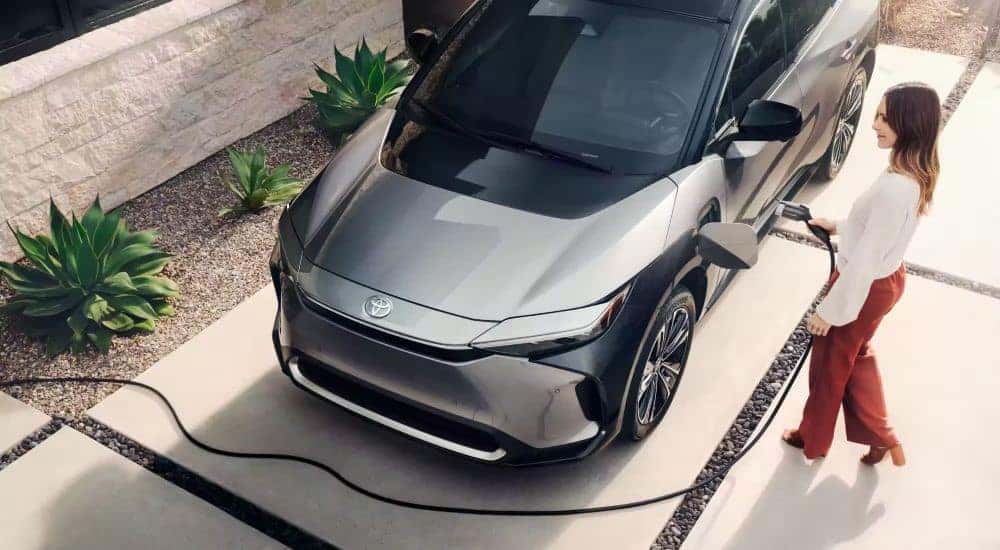
First, try to avoid high temperatures when parking your vehicle in a location where it cannot be charged. Heat and lithium-ion batteries don’t get along well, leading automakers to install an automated temperature control system in most EVs. This temperature control system might improve overall efficiency, but the power it draws can also drain the battery to a dangerous degree. When parking your vehicle, try to make sure it’s in a shaded area or plugged into a charging station before you start losing valuable range.
Our second tip might seem counterintuitive, but if you’re looking to optimize battery longevity, don’t keep your EV fully charged. Most EVs include a battery management system that helps to regulate the charging rate for optimal battery health, but it’s important for drivers to know that when it comes to electric vehicles, 80% is the magic number.
Charging an EV beyond 80% can impact a battery’s longevity, and it’s also less efficient. When an EV reaches the 80% mark, charging rates begin to slow down by a substantial margin, which means it can take an inordinate amount of time to crawl all the way to 100%. If you’ve got a long road trip ahead and need every mile of EV range, you might want to top the battery off to 100%, but in most cases, 80% will offer plenty of range without impacting overall battery life.
Drivers will also want to avoid fast charging whenever possible. These DC Fast Charging stations certainly do the trick, but they can also cause a battery to reach high temperatures that can wreak havoc on battery life. Yes, it’s convenient to be able to charge an EV up to 80% in just 30 minutes, but there’s a downside to this approach as it can put some serious strain on the battery. How much strain? Reports vary, but one study found that eight years of fast charging will result in a 10% reduction in battery life, while another estimated a 4% difference after 50,000 miles.
Lastly, be mindful about how you store your EV. If you’re putting your ride away for an extended period, make sure that the battery isn’t totally full or empty, as both extremes can cause it to break down over time. The easiest solution is to invest in a timed charger, which can periodically supplement your battery, keeping it at a steady level—ideally between 25% and 75%—to ensure optimal performance.
EVs hold a lot of promise and have already done a great job of proving that they can be a viable alternative to gas-powered vehicles, but the segment is still going through some growing pains. The prospect of EV battery replacement might be keeping some drivers from exploring the electrified side of personal transportation, but it’s not nearly as bad as some of the detractors will have you believe.
EV battery replacement cost is falling all the time; between the development of more EV battery infrastructure, battery refurbishment clinics, and a new generation of ultra-efficient batteries, things are only looking up. If you want to avoid EV battery replacement for as long as possible, it’s as easy as developing some good charging habits.
If properly maintained, an EV can save the average driver thousands of dollars over the vehicle’s lifetime—so don’t let something as rare and manageable as a battery replacement keep you from exploring these exciting new offerings.

0 comment(s) so far on A Guide To Replacing Your EV’s Battery