Open Today Sales: 9 AM-6 PMOpen Today Service: 7 AM-3 PM
While a lot of people point to the tires of their vehicle as the most important part of their car––since the tires are the only part of the vehicle that touches the road––we would suggest that the brakes are even more vital. Good contact with the road is very important for driving, but being able to stop safely is essential. That is why proper brake service is the cornerstone for ensuring you keep your car in great shape and stay safe when you are behind the wheel.
Understanding how the brakes work to slow and stop your vehicle is a great way to become better acquainted with how your car operates and what you should know when you are behind the wheel. While you might not become a mechanic or do a lot of maintenance on your car, the more you know, the easier it is to tell when something is wrong. Acting early to have a part replaced or have repairs made can help you avoid bigger and more expensive problems and help you avoid collisions. For all of your vehicle needs, including brake service, come visit us at Romeoville Toyota, and we will take good care of your car.

Whether you are interested in doing some work on your own vehicle, or you simply enjoy going for a drive after a long day, we find it very helpful to understand how different systems in your car operate. For example, by knowing how your brakes work, you can more easily identify when something is wrong with them and your car needs brake service. By the end of this, you will not be a mechanical engineer or anything, but you will have a good sense of what goes on when you press down on the brake pedal.
First, let us look at the major parts of your vehicle's brake system. In general, this comes down to two different things: the brake hydraulics and the actual brakes themselves. There are two different types of brakes used in the auto industry, so we will talk about both types: disc and drum brakes. No matter which type of brakes your vehicle has, the hydraulic system is, more or less, the same from one car to another.
The hydraulic system in your vehicle's brakes is designed to amplify the force you apply when you step down on the pedal. You should be able to slow or stop your car by applying only a little bit of pressure to your brake pedal, yet the system has to slow your wheels that are spinning very fast. This is done by a large master cylinder that is directly connected to your brake pedal and smaller slave cylinders that are located at each wheel.
When you apply the brake, a piston in the master cylinder is depressed, pushing against the hydraulic fluid, which sends fluid to the slave cylinders. This fluid then depresses pistons at each of the slave cylinders, and the pressure is distributed evenly throughout the system. These slave cylinders then apply force to the brakes that actually slow your wheels down. By using this kind of hydraulic system, a little bit of force applied by you on the brake pedal is multiplied and greatly increased by the time it reaches the wheels and brakes.
As we said, there are two major types of brakes: disc and drum. If your vehicle is quite old, it might have drum brakes on all four wheels. Even if you have an older car, though, it is more likely that you have disc brakes on the front wheels and drum brakes on the rear wheels. Modern cars and older luxury cars will usually have disc brakes on all four wheels. However, your exact configuration really depends on what type of car you have.
Disc brakes have a disc that spins along with your wheels, and this has a large caliper on it that houses brake pads and the slave cylinders connected to your brake hydraulic system. When you apply the brakes, these pistons press the brake pads against the disc, which slows your vehicle down. Nothing applies a braking force directly to your wheels––the pads slow the disc, which in turn slows your wheels.
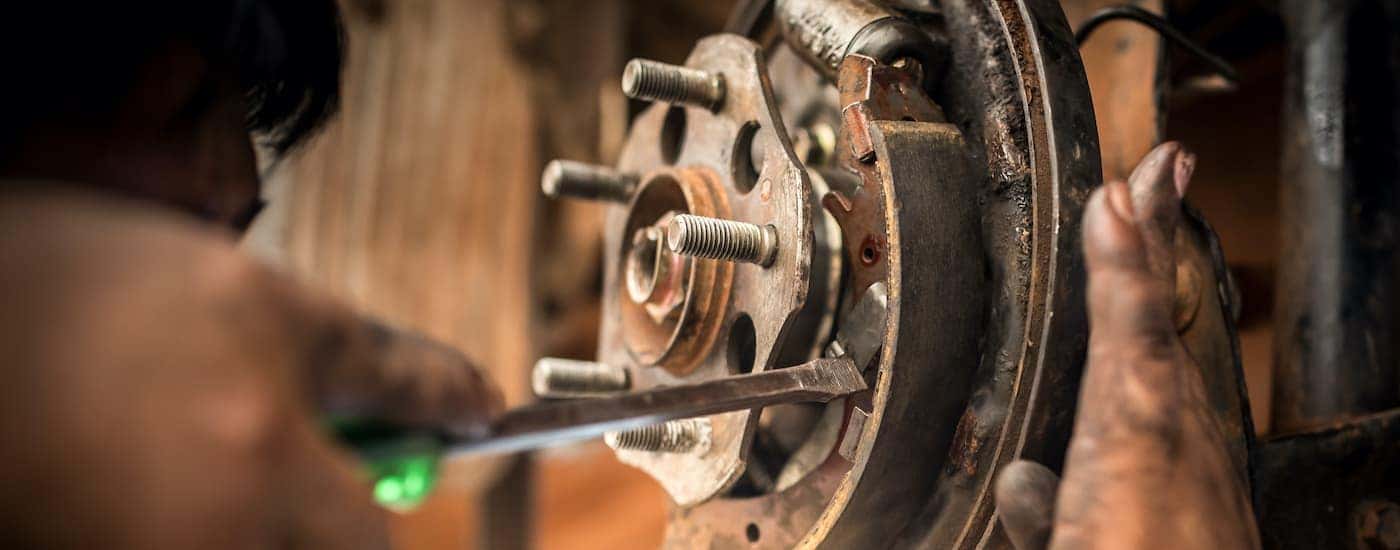
With drum brakes, there is a hollow drum that spins with your wheels rather than a disc. When you apply the brake pedal, pistons within the drum push shoes against the inside of the drum; brake linings (rather than pads) on these shoes take the brunt of the friction and heat. So with disc brakes, pads press against the disc from outside of it to slow it down, while drum brakes have lined shoes that press against the drum from within to slow it down.
They both work well, though disc brakes are typically more effective and can handle abuse better. When you slow down, the weight of your vehicle shifts to the front, which means the front brakes have to do more work than the rear ones. That is why modern vehicles typically have disc brakes on the front, if not on all four wheels.
We talked about the hydraulic system and how important it is to your brakes––that it turns the minimal force of you pressing down on the brake pedal into the tremendous amount of force needed to stop a vehicle traveling at high speeds. Now it's time to dive into the most important part of any hydraulic system: the fluid. The brake fluid in your vehicle is the pressurized fluid used by your brakes in its hydraulic system, which is vital for letting you slow down and stop your car in a reasonable distance.
Brake fluid is not just water or something similar; it is a carefully designed and manufactured liquid that is made to work well and keep your system running efficiently. It has a certain viscosity to it that ensures it can flow through your car's hydraulic system, and it is made with anticorrosive agents to help keep the hoses and other brake components from degrading too much with use. It also has a very high boiling point to keep it from being vaporized by the intense heat generated by your brakes when you come to a stop.
Even though the brake fluid in your vehicle is designed to be as efficient and long-lasting as possible, nothing is perfect––this means brake fluid will "go bad" over time. A few different things can happen for it to go bad: it can be exposed to air and absorb moisture as a result, or the brake fluid can start to break down and have its anticorrosive properties lose effectiveness over time. Regardless of the cause, once your brake fluid no longer works as well as it should, it needs to be flushed out and replaced by a professional. If your brakes feel soft or a warning light comes on, it could mean you have a leak or that your fluid is no longer as good as it should be––either way, visit our service department to have things checked out right away.
Even though your brakes are designed to do a ton of work and keep you safe on the road for a very long time, they still get worn out over time. For the most part, wear and tear on your brakes will occur simply due to you driving and using them on a daily basis. No matter what types of brakes you have on your vehicle, they essentially work in the same way: applying force to an object that slows down its spinning, which slows down and eventually stops your wheels and tires.
Regardless of whether pads and a disc are involved or shoes and a drum, the result is the same: the parts applying the stopping force undergo a tremendous amount of abuse. The pads and shoes are designed to work incredibly well and handle huge amounts of heat and friction, but daily use still takes its toll on them. Over time, the pads and shoes will wear down as slowing and stopping your vehicle is essentially a destructive action for them. This means that as you drive, the pads and shoes will need to travel slightly further in order to apply as much force and slow you down, which is why you often feel like you need to press more on the pedal to stop your vehicle as the brakes wear out.
Since general use is the biggest factor in wearing out your brakes, your driving habits and typical conditions have a big impact on how quickly they wear out. If you spend a lot of time in stop-and-go traffic, then you are using your brakes a lot more than someone who is traveling longer distances on the highway without stopping often. Slamming on your brakes to make a sudden stop will make them work harder, so someone who has a habit of waiting to the last moment and stopping hard may go through their brakes faster than other drivers. In some cases, your brakes can also wear out due to damage or other factors beyond simple wear and tear, particularly if you often drive on dirt or gravel roads or parking lots.
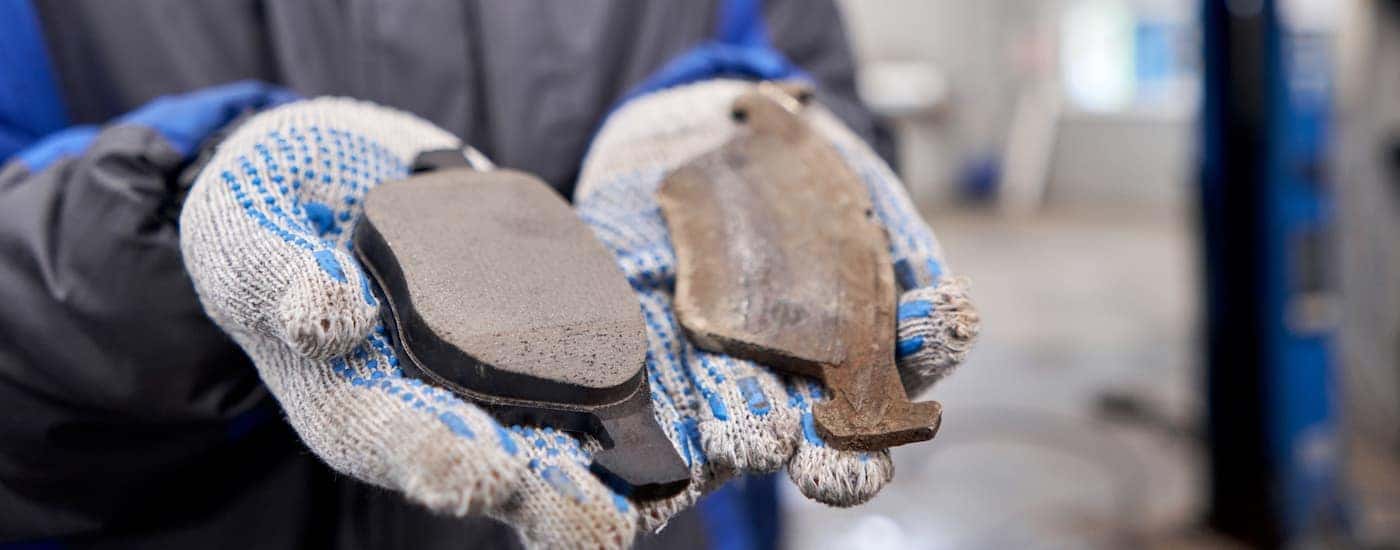
If you have disc brakes on your vehicle––you likely have them at least on the front––then you might have heard your mechanic talk about your "brake rotors." Earlier, we looked at how disc brakes work and talked about how pads are clamped down on the disc to stop your wheels from turning––the "rotors" in this system is simply another word for the discs. So if you hear someone talking about the rotors in your car's brakes, they are talking about the disc that the pads clamp onto when you slow down and stop.
Although the brake pads tend to get most of the attention for how hard they work and the abuse they suffer, the rotors on your car also take a lot of heat since they have force directly applied to them by the pads. Brake rotors are designed to handle this work, however, and will typically last up to 70,000 miles without needing to replace them. You will likely need to replace your brake pads before that, which is why people tend to focus on them more when talking about brake service.
That being said, it is still possible for you to need to have your rotors replaced sooner than you might initially expect. Just like anything else, things can go wrong with your rotors, or you might put more wear and tear on them than is expected from the average driver. Like the rest of your brake system, the lifespan of your rotors depends on your driving habits––if you use your brakes a lot more than some other drivers, then you might need to have them replaced sooner. This is common for delivery drivers or ride-sharing service providers who have to make a lot of stops while driving and who put more miles on their vehicle than many other drivers.
There are quite a few signs that you might notice which can warn you that it is time to replace the lining or pads on your brakes. Sometimes there can be more serious issues that require brake service, or you might have a leak in the hydraulic system. Any time you notice any of these warning signs, do not wait––bring your vehicle to Romeoville Toyota for brake service right away.
Some common warning signs of brake issues include:
If you suspect something is wrong with your brake system, then have it checked out immediately at our service department. Better to be safe than sorry when it comes to your brake system.
We know that taking your vehicle in for service is probably not something you look forward to on any given day. This being said, proper service and maintenance for your vehicle are vital for you to get the most from your car and, more importantly, for you to be safe and in control on the road. Brake service is particularly vital since it can mean the difference between being able to stop in a reasonable distance or slamming into the back of the car in front of you.
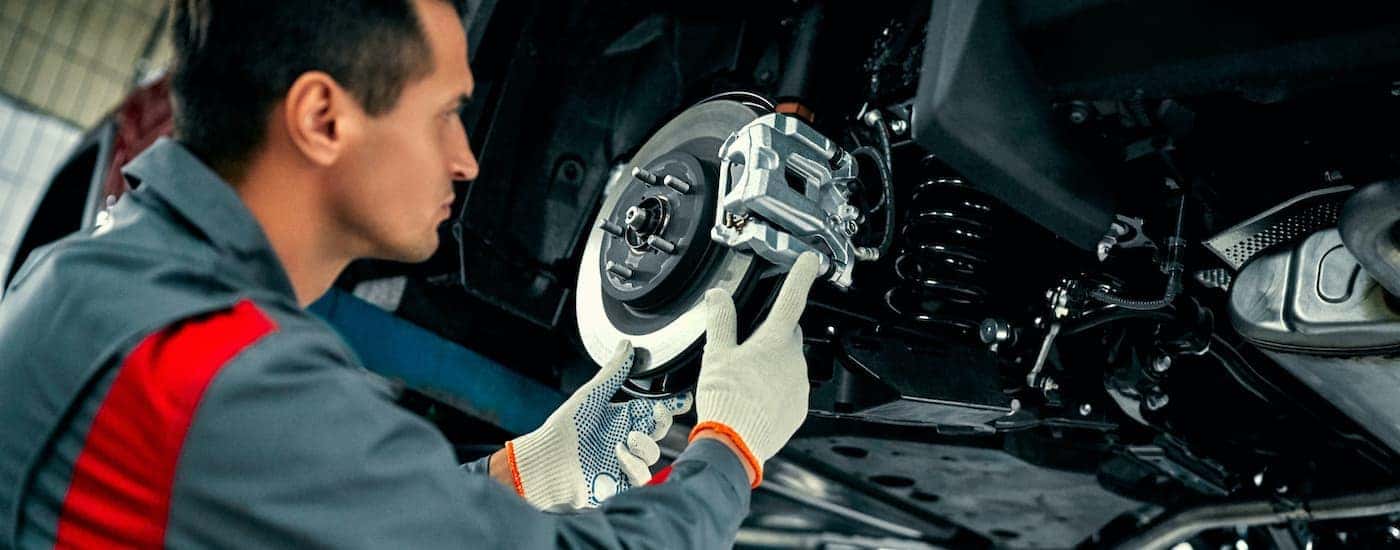
Fortunately, when you bring your vehicle to Romeoville Toyota for brake service, you can also take care of some other stuff, so you do not have to worry about maintenance again for a while. Brake inspections, replacements, and repairs involve lifting your vehicle up so we can get under it, which means it is the perfect time to do other work that requires this kind of access. Since we are already checking your brakes, we will want to check the condition of your wheels and tires, as well as your suspension and alignment.
This would also be a great time to have us change your oil if you are due for an oil change or have one scheduled soon. We can also make sure to inspect other aspects of your brakes beyond what might be an issue; for example, if we need to replace your brake pads, we can also check your brake fluid to ensure it looks good. It is easy for us to do the opposite as well: if we have your vehicle lifted for an oil change or to check your alignment, then it is the perfect time for us to inspect your brakes and make sure nothing needs to be replaced. This lets us get you back on the road quickly and gives you more time before your next inspection.

Malfunctioning or failing brakes are incredibly dangerous to drive on and can result in further damage to your vehicle or a serious collision. Here at Romeoville Toyota, we are your brake specialists, and we can have your brakes working properly again quickly and affordably. Taking proper care of your vehicle ensures it runs in the best condition possible and makes it safer and easier for you to enjoy your time behind the wheel. If you suspect you need any kind of brake service done, then we are here to help. As a fully-equipped certified service center, we can also help with any other maintenance issues that your vehicle might have. And with our on-site parts center, we have a full inventory of factory Toyota parts on hand at all times. Call or come visit us at Romeoville Toyota today, and we will keep your vehicle in great shape!